




Francois Truffaut PREVIOUSLY AT FILM FORUM
 

“A BEAUTIFUL, HEARTBREAKING PICTURE, ONE OF TRUFFAUT'S BEST... lovely, deceptively simple and profoundly moving, arguably Truffaut's most thoughtful exploration of the collision between childhood and civilization.”
– Andrew O'Hehir, Salon.com
Click here to read full review


“RAVISHING! A film about the simultaneous birth of consciousness and the extinction of spontaneity. The drama lies in the doctor’s spiritual journey; it takes us a while to realize that Itard is almost as strange as his subject.”
– David Denby, The New Yorker
Click here to read full review


“***** [5 stars]
"FILM OF THE WEEK!"
“Intimately gorgeous. Almost nothing in Truffaut's filmography resonates with as much sympathy... Truffaut never upstages the astounding Jean-Pierre Cargol; both performers underplay in perfect harmony."
– David Fear, Time Out New York
Click here to read full review


"A SUPERIOR CINEMATIC MASTERPIECE!" – The Village Voice

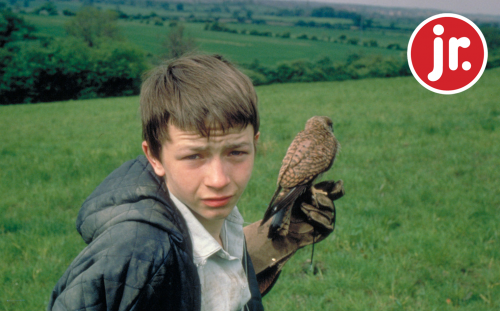
(1970) 1798, and farmers in the south of France, on the hunt for a predator, find it’s a naked young boy, presumably grown up in the wild without human contact. As the latest sensation, he’s paraded before fee-paying gawkers at the institute for the deaf and dumb, as Dr. Itard (played by director Truffaut) debates with his mentor Dr. Pinel as to his fate — a purely natural human, a tabula rasa, or simply an idiot? Aided by his housekeeper, Truffaut takes the boy into his home in an attempt to educate and civilize him — but, as he notes, babies take eighteen months to learn to talk. Based on an actual case, with its voiceover narration (delivered staccato-style by Truffaut) an adaptation of Itard’s two reports into diary form, this is the director’s nearest approach to documentary, with Nestor Almendros’ striking b&w photography evoking the earliest days of the cinema and a much-imitated all-Vivaldi score. As l’enfant sauvage, Jean-Pierre Cargol, a French Roma boy picked from over 2,500 hopefuls, is alternately ferocious and docile (although, happy and well-adjusted in real life, he had trouble doing the tantrums). As Itard, cast partly because he realized he’d be directing the boy within the film, Truffaut imposed on himself a “no smiling” rule — he lapses briefly once — to attain a kind of gravity, but then this only reinforces his ruthlessly unsentimental treatment of potentially treacly material, even as the inevitable question (“Was it worth it?”) arises. (Alfred Hitchcock wrote Truffaut asking for “the autograph of the actor who plays the doctor, he is so wonderful,” while Steven Spielberg was so impressed by the director’s compassionate performance that he cast Truffaut in Close Encounters of the Third Kind.) Dedicated to Truffaut’s own “wild child,” Jean-Pierre Léaud. “Endlessly fascinating… Truffaut places his personal touch on every frame … It is an intellectually cleansing experience to watch this intelligent and hopeful film.” – Roger Ebert. “Suffused with Truffaut’s radiant love for the movies’ beginnings, when everything was being done for the first time. It has a miraculous kind of balance: between freedom and control, originality and homage, the discovery of new experience and the contemplation of the past… Truffaut gives us an image of himself as both master and student, the image that contains all we need to know of him.” – Terrence Rafferty, The New Yorker.
A FILM DESK/HEATHEN FILMS RELEASE

“From Romulus and Remus through Mowgli and Tarzan, men have continually been fascinated by tales of beast children. It may be that in these stories of abandoned infants, reared by wolves, bears or apes, they see a symbol of the extraordinary destiny of our race. Or it may be that they harbour a secret hankering after a natural existence.”
– François Truffaut

"FLAWLESS. A beautiful, elegant, and, yes, moving refutation of the notion that without theism,
moral chaos is inevitable. In today's God wars, Truffaut's film is a potent parable for non-believers."
– Glenn Kenny, The Auteurs' Notebook

Click here to read full review

"CRITIC'S PICK: A gorgeous new print!" – Time Out New York

"A confident assertion of the Enlightenment values of reason and education. Magnificent." – Dave Kehr, The New York Times

"Taking The 400 Blows to another level, François Truffaut's 1970 feature... [is a] momentous study."
– Nicolas Rapold, The Village Voice
Click here to read full review

“BEAUTIFUL! Truffaut is very close to his subject... what begins as coolly academic evolves into a study of warmth and understanding.”
– Nick McCarthy, L Magazine

“As lucid and wryly witty a film as you could wish for… A beautiful use of simple techniques - black-and-white photography, Vivaldi music, even devices as outmoded as the iris - give it a very refreshing quality. DEEPLY MOVING.”
Time Out (London)

“LUMINOUS! The deepest of all Truffaut’s examinations of the world of children. One of the masterpieces of his career. Its frequent iris shots recall D.W. Griffith, as do the combination of its simplicity of means and depth of emotion.”
– Charles Taylor, Salon.com

Awards:

  • National Board of Review: Best Director, François Truffaut;
    Best Foreign Language Film, France; 1971.
  • National Society of Film Critics Awards, USA: Award,
    Best Cinematography, Néstor Almendros; 1971.
  • French Syndicate of Cinema Critics: Critics Award,
    Best Film, François Truffaut; 1971.

Links:

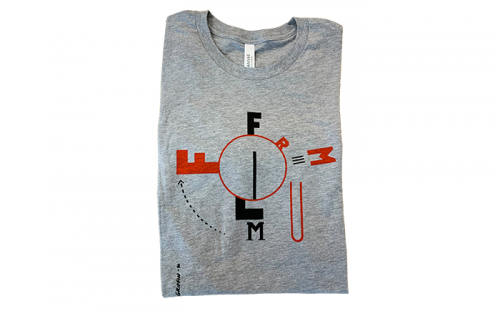
New posters on sale at Film Forum.
$20 (plus tax) while supplies last.