
(1968) Russia, 1805-1812: life, love, and death in the Rostov, Bolkonsky, and
Bezukhov families: from a desperately wounded man staring up at the clouds in
the aftermath of the battle of Austerlitz; to the delirious ecstasy of a young girl’s
first ball; to the clumsy, comic, and ironic climax of a duel in the snow; to the
monstrous spectacle of the Battle of Borodino (“beyond question the cinema’s
best and most elaborate battle sequence” – Chicago Tribune); to the cinders falling like snowflakes at the burning
of Moscow; to the endless columns of stumbling men struggling amid the drifts, as Napoleon Retreats.
Director/star/co-writer Sergei Bondarchuk’s adaptation of Leo Tolstoy’s classic remains the most expensive movie
ever made ($100,000,000 in 1960s dollars — multiply by almost 7 for 2007 equivalent) and arguably the most
spectacular, as the camera swoops over gigantic battle scenes (over 100,000 pre-CGI extras culled from the Soviet
army). Veteran acting star Bondarchuk cast himself as Pierre, but, on only the second film he directed, took
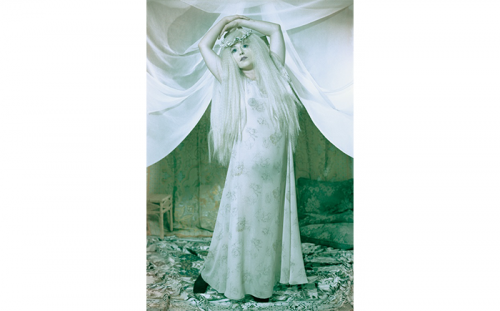
artistic chances as well, triumphantly casting erstwhile teenage ballerina Ludmila Savelyeva — in her
first acting role ever — as the enchanting Natasha; and using hand-held point-of-view shots,
superimpositions, split screens; and even throwing scarves past the camera. “The greatest
film ever made has been made” read the ads for its 1968 U.S. premiere; even cut by an
hour and dubbed into English, it still won the Best Foreign Film Oscar (Natalie Wood
presented the award in fluent Russian to Savelyeva). We are showing a 7-hour,
Russian-language version (subtitled in English). “It is easy enough to praise
director Bondarchuk for his thundering battle scenes, or his delicate ballroom
scenes, or the quality of his actors. But these were almost to be expected.
What is extraordinary about War and Peace is that Bondarchuk was able to
take the enormous bulk of Leo Tolstoy’s novel and somehow transform it into
this great chunk of film without losing control along the way. . . . He balances
the spectacular, the human, and the intellectual. Even in the longest,
bloodiest, battle scenes there are vignettes that stand out. Bondarchuk is able
to bring his epic events down to comprehensible scale without losing his sense
of the spectacular. And always he returns to ToIstoy’s theme of men in the grip
of history.” – Roger Ebert.
A SEAGULL FILMS RELEASE.
|