





NOW PLAYING / TICKETS COMING SOON SPECIAL EVENTS MEMBERSHIP SUPPORT FILM FORUM ABOUT US FILM SOURCES MERCHANDISE & ART

SUNDANCE INSTITUTE OPEN SOCIETY INSTITUTE
OSIUS10 Tenth Anniversary U.S. Programs 2006OPEN SOCIETY INSTITUTE

THURSDAY – SUNDAY • OCTOBER 26 – 29
SOROS/SUNDANCE DOCUMENTARY FUND
A Tenth Anniversary Film Series

SUNDANCE INSTITUTE
The Open Society Institute and the Sundance Institute present a series of
seventeen of the most provocative documentaries made with support from the Soros/Sundance Documentary Fund

All Tickets are $5.50


CLICK HERE FOR CATALOG OF FILM SERIES [.PDF - 1.94 MEG]


Thursday, October 26

1:30 p.m.

Stranger with a Camera
Elizabeth Barret
Stranger with a Camera USA, 2000, 62 minutes, In English, Appalshop Inc.

In the late 1960s, Canadian filmmaker Hugh O’Connor visited Appalachia to document poverty. A local landlord, Hobart Ison, who resented the presence of filmmakers on his property, shot and killed O’Connor. Filmmaker Elizabeth Barret, a native of Appalachia, reflects onthis incident, exploring the complex relationship between those who make images to promote social change and the people whose lives are represented in such productions. Through first person accounts of the killing, archival footage, and the perspective of three decades, Stranger with a Camera examines Barret’s own role as both a maker of media and a member of the Appalachian community she documents. Followed by a conversation with the filmmaker and Erlin Ibrek, Director of OSI’s Youth Initiatives Program.

4:00 p.m.

Long Night’s Journey into Day
Deborah Hoffman and Frances Reid
USA, 1999, 95 minutes, In English, Afrikaans, and Xhosa with English subtitles, Seventh Art Releasing

Long Night’s Journey into Day While many nations remain haunted by a history of state-sponsored terror and oppression, Long Night’s Journey into Day is an inspiring portrait of a wounded society recognizing the importance of conscience and the truth. Filmmakers Frances Reid and Deborah Hoffman follow four dramatically different cases that came before the Truth and Reconciliation Commission—from American exchange student Amy Biehl’s parents, who meet their daughter’s murderer, to the wives of the slain activists known as the Cradock Four, who meet the policemen that killed their husbands—to illustrate South Africa’s quest for restorative justice. Followed by a conversation with Paul van Zyl from the International Center for Transitional Justice & OSI’s President Aryeh Neier. From 1995 to 1998, Paul served as executive secretary of the Truth and Reconciliation Commission in South Africa - he helped establish the Commission and develop its structure.

7:00 p.m.

Calling the Ghosts: A Story about Rape, War, and Women
Mandy Jacobson and Karmen Jelincic
Executive Producer: Julia Ormond
Bosnia-Herzegovina/USA, 1996, 63 minutes, In Bosnian and Croatian with English subtitles, Women Make Movies

Calling the Ghosts: A Story about Rape, War, and Women Calling the Ghosts is the first-person account of two women caught in a war where rape was as much of a weapon as bullets and bombs. Jadranka Cigelj and Nusreta Sivac, childhood friends and lawyers, enjoyed the lives of ordinary, modern women in Bosnia-Herzegovina until their former neighbors became tormentors. Taken to the Serb concentration camp of Omarska, the two women, like other Muslim and Croat women interned there, were systematically tortured and humiliated by their captors. Once released, the pair turned personal struggles for survival into a larger fight for justice—aiding other women similarly brutalized and successfully lobbying to have rape included in the international lexicon of war crimes by the UN Tribunal at The Hague. Followed by a conversation with filmmaker Mandy Jacobson, New York Times Magazine journalist Elizabeth Rubin & OSI’s Laura Silber.
Preceded by

Red Rubber Boots
Jasmila Zbanic, Bosnia, 2000, 19 minutes, DEBLOKADA

Red Rubber Boots is an unsentimental portrayal of one woman’s search for her husband and two children, who were killed by the Serbian army during the war in Bosnia and buried in a mass grave. The film offers a lyrical and haunting meditation on the unfathomable and grieving.

Friday, October 27

1:30 p.m.

Hillbrow Kids
Jacqueline Görgen and Michael Hammon
Germany, 1999, 94 minutes, In English and Afrikaans with English subtitles, Media Luna Entertainment

Hillbrow Kids Hillbrow, a neighborhood in Johannesburg, South Africa, became home to countless street children in the mid-1990s. These kids beg for change outside stylish cafes, sleep under bridges in cardboard boxes, and form alliances that are part friendship and part defense—against older, bigger kids. Hillbrow is a mine-ridden playground, where malnutrition, rape, and child prostitution are rampant, and even glue sniffing can seem pragmatic in the face of hunger. Filmmakers Michael Hammon and Jacqueline Görgen allow these young people to talk about their lives, depicting a neighborhood and the socioeconomic realities of post-apartheid South Africa that have propelled the kids there.

4:00 p.m.

SOUTHERN COMFORT Southern Comfort
Kate Davis
USA, 2000, 90 minutes, In English, Q-Ball Productions

Southern Comfort tells the story of Robert Eads, a 52 -year-old female to male transsexual, who lives in rural Georgia. Diagnosed with ovarian cancer, Robert was turned away by more than two dozen doctors who feared that taking on a transgendered patient might harm their practice. Filmmaker Kate Davis weaves a tale of humor, romance, and tragedy, documenting the final year of Robert’s life as he copes with ovarian cancer and pursues a romance with Lola Cola, a transgendered male to female. Followed by a conversation with filmmaker Kate Davis.

6:30 p.m.

Children Underground
Edet Belzberg
Children UndergroundUSA, 2001, 103 minutes, In Romanian with English subtitles, Belzberg Films Inc.

First-time director Edet Belzberg ventures below the streets of Bucharest, Romania, and gained the trust of a “family” of orphaned, abandoned, or runaway children living in the Piata Victoriei subway station. The intimate, cinema vérité style allows the children to speak for themselves, revealing both the conditions of their existence—the children beg and steal to buy food and Aurolac paint, which they sniff to get high—and their uninhibited, distinct personalities. Cristina uses her rough boyish look and physical size to enforce her position as ringleader of the group. Mihai, the most reflective, regrets having left his mother and sister with his violent father and dreams of a conventional life and family. Ana fled poverty and assumes a motherly role toward her younger brother Marian. And Macarena has lost nearly all sense of herself after four mind-numbing years of homelessness. As a whole, the film reflects on the larger problem of youth homelessness in the world today. Followed by a conversation with filmmaker Edet Belzberg.

9:00 p.m.

Persons of InterestPersons of Interest
Alison Maclean and Tobias Perse
USA, 2003, 63 minutes, In English. A First Run/Icarus Films Release

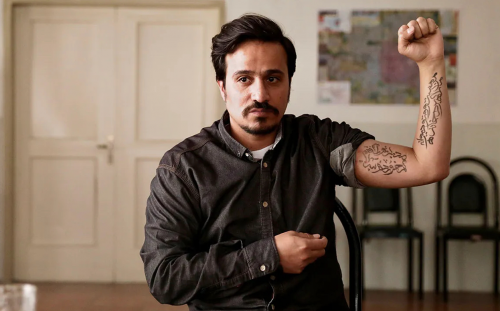
After the September 11, 2001 terrorist attacks, more than 5,000 people, primarily of South Asian or Middle Eastern origin, were taken into custody by the U.S. Justice Department and held indefinitely. They were subject to arbitrary arrest, secret detention, solitary confinement, and deportation. Many were denied access to legal representation and communication with their families. In Persons of Interest, filmmakers Alison Maclean and Tobias Perse interview a series of former detainees in a barren room that evokes an interrogation room. Through interviews, family photographs, and letters from prison, the directors give the detainees who the state department has depersonalized, refusing to reveal their names or the number held, a chance to tell their own stories.Conversations with ASYLUM and PERSONS OF INTEREST filmmakers follow each show.
ASYLUM Preceded by
Asylum
Sandy McLeod and Gini Reticker
USA, 2003, 20 minutes, In English, Filmmakers Library

Baba, a young Ghanian woman, goes in search of her father for his blessing to marry the man she loves. Her joy at finding him turns into a nightmare as he insists that she undergo female genital mutilation. She is forced to flee her father’s village and seek refugee status in the United States. Conversations with ASYLUM and PERSONS OF INTEREST filmmakers follow each show.

Saturday, October 28

1:30 p.m.

Iran: Veiled Appearances
Thiery Michel
Iran: Veiled AppearancesBelgium, 2002, 90 minutes, In French with English subtitles. A First Run/Icarus Films Release

For years, Iran has been depicted as home to Muslim fundamentalists and more recently, as a radical country on the brink of developing nuclear weapons. And yet, many Westerners know very little about the country. With unprecedented access, filmmaker Thierry Michel takes us inside a socially and culturally fractured society. For instance, decades after the Islamic revolution, Iranian youth — eyes turned toward the West and exposed to globalization — can no longer find their place in the religious revolution of their elders. The film explores this divide in the everyday lives of Iranians from all walks of life — including students, soldiers, religious figures, artists, and intellectuals.

3:30 p.m.

Punitive DamagePunitive Damage
Annie Goldson
New Zealand, 1999, 77 minutes, In English. A First Run/Icarus Films Release

Twenty-year-old Kamal Bamadhaj, who traveled to East Timor to assist in a human rights investigation, was among the estimated 271 unarmed East Timorese killed by the occupying Indonesian military. Punitive Damage traverses New Zealand, Australia, Indonesia, Malaysia, and the United States, and incorporates eyewitness accounts from Timorese exiles and clandestinely shot footage and photographs, as Bamadhaj’s mother Helen Todd searches for truth and justice. In groundbreaking legal action, Todd and the Center for Constitutional Rights take the Indonesian Government to court in the United States, setting an important precedent in a global trend to bring international human rights violators to trial.
Preceded by
STILL STANDING Still Standing: A Youth Organizers Television Documentary on Hurricane Katrina
Filmmakers:  Luis Arcentales, Vanessa Bateau, Jeongwoon Eun, Ines Morales, Adrianne Morraz, and Sergio Sanchez
yo-tv Director: Lindsay Fauntleroy
USA, 2006, 11 minutes, In English, Educational Video Center

Still Standing is an intimate portrayal of the challenges faced by a Hurricane Katrina survivor six months after the storm. Ms. Gertrude, a grandmother and New Orleans homeowner, travels regularly from temporary housing in Houston, Texas to what remains of her home. Without insurance money or federal assistance, she fights for the right to rebuild. Her story reveals the neglect of marginalized communities in urban America, the inadequacy of public assistance to provide long-term solutions, and the struggles necessary to bring about positive change. Youth Organizers Television (YO-TV), a program of the Educational Video Center, enables talented students to produce documentaries. Followed by a conversation with the youth filmmakers.

6:30 p.m.

Special Sneak Preview
My American Dream: How Democracy Works Now
Michael Camerini and Shari Robertson
USA, work-in-progress, In English and Spanish with English subtitles, Rocofilms

In the summer of 2001, award-winning filmmakers Shari Robertson and Michael Camerini (Well-Founded Fear and Born Again) began filming the lives of 24 people engaged in the struggle surrounding U.S. immigration policy. The journey took them from Washington D.C. to a small town in Iowa to the wars within the Kansas Republican Party and to the Arizona border. Viewers move beyond the clichés and polarizing sound bites that fill public discourse to witness the process of social change and democracy. The filmmakers hope that their intimate portraits of personal victories and defeats will inspire as much as they shock, and remind viewers that this country is the product of millions of intersecting lives. This special sneak preview features excerpts from the work-in-progress. Followed by a conversation with filmmakers Michael Camerini and Shari Robertson.

9:00 p.m.

One Day in SeptemberOne Day in September
Kevin Mac Donald
United Kingdom, 1999, 92 minutes, In English and German, Sony Pictures Classics

From the director of the political thriller currently in cinemas, THE LAST KING OF SCOTLAND. With the recent release of Steven Spielberg’s Munich, audiences are familiar with the tragic events of the 1972 Olympics in Munich, Germany. On September 5, 1972, the Palestinian group, Black September, entered the Olympic Village and took 11 Israelis hostage. In One Day in September, filmmaker Kevin MacDonald crafts a documentary thriller of these events. He weaves together archival footage and contemporary interviews— including the first and only with Black September’s Jamal Al Gashey and with Ankie Spitzer, the widow of one of the Israelis—to reveal the ineptitude of the German police and the duplicity of the government, the insensitivity of the International Olympic Committee, and the devastating influence of the mass media as events unfolded.

Sunday, October 29

1:30 p.m.

Señorita Extraviada, Missing Young Woman
Lourdes Portillo
USA, 2001, 74 minutes, In Spanish and English with English subtitles, Women Make Movies

Senorita Extraviada (Missing Young Woman) Señorita Extraviada, Missing Young Woman tells the largely hidden story of the hundreds of young women who have disappeared from Juárez, Mexico. In the midst of Juárez’s multinational job market, there exists a history of grossly underreported human rights abuses and violence against women. The climate of violence and impunity continues to grow, and the unsolved rapes and murders of women persist to this day. Visually poetic, yet unflinching in its gaze, this investigation examines the layers of complicity surrounding the murders, relying on what filmmaker Lourdes Portillo sees as the most reliable of sources: the testimonies of the families of the victims. This double feature will be followed by a discussion with Debbie Zimmerman from Women Make Movies & Laurie Freeman.
Preceded by
There Are Women in Russian Villages
Pavel Kostomarov and Antoin Kattin
Russia, 2006, 27 minutes, In Russian with English subtitles, Institute for Social & Gender Policy

There Are Women in Russian Villages demonstrates that poverty in Russia is increasingly a women’s phenomenon. Luba and her daughter Aleysa escaped domestic violence and now live in an isolated Russian village. With few employment options available, both women work as milkmaids, an underpaid and strenuous profession, to feed Aleysa’s siblings. While many in their circumstances would seek help from the government, they have no one to rely on except themselves.This double feature will be followed by a discussion with Debbie Zimmerman from Women Make Movies & Laurie Freeman.

4:00 p.m.

Life and Debt
Stephanie Black
Life and DebtUSA, 2001, 86 minutes, In English, New Yorker Films

Jamaica—for tourists, it is a land of sea, sand, and sun. It is also a prime example of the impact that economic globalization can have on a developing country and its people. Life and Debt reveals the “mechanism of debt” that destroys local agriculture and industry: cheap American powdered milk replaces local dairies; Chiquita wipes out Jamaican banana farmers; and Idaho potatoes displace regionally grown crops. The complexity of international lending, structural adjustment policies, and free trade are understood through the stories of the Jamaicans whose lives they impact. The film features a voiceover narration written by Jamaica Kincaid, and based on her award-winning book A Small Place, and music by Bob Marley, Ziggy Marley and the Melody Makers, and Buju Banton. Followed by a conversation with the filmmaker Stephanie Black.

6:30 p.m.

The Inner TourThe Inner Tour
Ra’anan Alexandrowicz
Israel, 2001, 94 minutes, In Arabic and Hebrew with English subtitles, Zeitgeist Films

Filmed just before the outbreak of the September 2000 intifada, The Inner Tour depicts a group of Palestinians on a three-day sightseeing tour of Israel, where many once lived and raised families. Tourism was one of the only ways that Palestinians could cross the Green Line, denoting the post-1967 border, and enter Israel. (Such trips are no longer possible.) A weekend jaunt across the border becomes an emotional encounter with a vanished past and the realities of the present day. As they make their way around the country, their observations paint a complex portrait of one of the world’s most tangled conflicts.

8:30 p.m.

Liberia: An Uncivil War Liberia: An Uncivil War
James Brabazon and Jonathan Stack
USA, 2004, 90 minutes, In English, Gabriel Films

In Liberia, the summer of 2003 was pure insanity. Two armies engaged in the final battle of a decade-long civil war, holding the capital under siege as thousands died. While the rebel army, Liberians United for Reconciliation and Democracy (LURD), attempted to overthrow the government, President Charles Taylor and his army maintained a strong grip on the city. Acclaimed filmmaker Jonathan Stack and journalist James Brabazon captured the conflict from the inside, filming the rebels as they fought their way to the capital and covering the defense of the city from within. The film completes the picture with a series of exclusive interviews with Taylor, who has since been indicted for war crimes. The film situates the conflict within this larger international political context, focusing attention on the moral failure of the United States to respond to a growing humanitarian crisis. Followed by a conversation with filmmaker Jonathan Stack.


RETURN TO TOP.
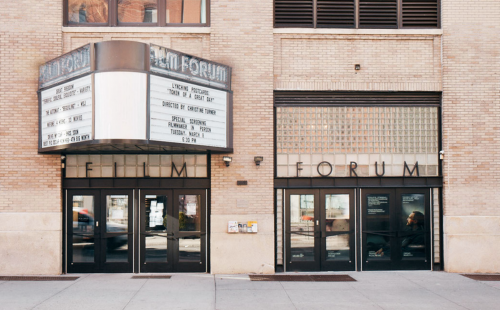
Questions/Comments? E-mail Film Forum. Box Office: 212-727-8110. Film Forum is located at 209 W Houston Street, between 6th Avenue & Varick, in New York City. Independent premieres at Film Forum are selected and programmed by Karen Cooper and Mike Maggiore. Repertory screen is programmed by Bruce Goldstein. (Schedule subject to change). © 2006, The Moving Image, Inc. All rights reserved. Not to be reproduced without permission. Website Manager: Richard J. Hutchins. This page was last updated on October 26, 2006