







RETURNING THURSDAY, JANUARY 28, 2010
Akira Kurosawa’s RASHOMON  Starring  Toshiro Mifune Machiko Kyo

“A character study, an anthropological inquiry, a tour de force of alfresco black-and-white cinematography, and an action movie with two volcanic performances... The nature and meaning of what happens is fodder for endless, passionate argument, but THE TRUTH ABOUT RASHOMON — THAT IT'S ONE OF THE BEST MOVIES EVER — IS BEYOND DISPUTE.”
– A.O. Scott, The New York Times
Click here to read entire review

“CRITICS' PICK! The new restoration is tops!”
– Time Out New York

“A MASTERPIECE! An inventive, hall-of-mirrors whodunit...
left a seismic mark on cinema's landscape and language!”
– Flavorpill

NEW 35mm RESTORATION!(1950) Fugitives from a ruined city huddling under a gigantic gate from a massive downpour; a brutal crime in a sun-splashed forest, the camera panning right into the sun; a tragicomic duel fought in eerie counterpart to a bolero: rape and murder in 12th century Kyoto, as seen by four conflicting witnesses. Adapted from two stories by early 20th century great Ryunosuke Akutagawa, Rashomon’s worldwide acclaim (Venice Grand Prize, Foreign Film Oscar) vaulted an already-great-but-internationally-unknown director and national cinema to world prominence — along with its two stars: Machiko Kyo’s performance would eventually land her a LIFE magazine cover, while, as the bandit, Mifune (“a wild, almost Brando-like performance” – Dave Kehr) goes beyond overacting into something so outrageous it could only be real. At first thought relevant only to the Japanese, Rashomon has become synonymous with the unknowability of truth, of how each person sees things in their own way. Seldom has any one film had more impact on the world’s perceptions. Approx. 88 minutes.

“GRACEFUL AND MYSTERIOUS! Still after multiple viewing over multiple years,
Kurosawa's innovative moral procedural remains bewitching... confirming the film's sustained complexity and charm.”
– L Magazine
Click here to read entire review

“If the greatest films of all time are also the most prismatic, Akira Kurosawa’s masterpiece
deserves its high slot in the pantheon for simultaneously encouraging and questioning every interpretation tossed in its direction.”
– The Onion AV Club

THE RESTORATION
The basis for this stunning new restoration was a 35mm print created in 1962 from the original camera negative; while the print itself was in good physical condition, the source material from which it was made was extremely battered. Due to the extensive printing and handling it had received over its lifetime, many shots were already starting to shrink and warp, and there were numerous scratches, dust, and dirt in the damaged negative. Scanned at 4k resolution, that 47-year-old print has been meticulously cleaned both digitally and by hand, complete with a new, seamless soundtrack.

This essential restoration has been made possible by the Academy Film Archive, the National Film Center of the National Museum of Modern Art, Tokyo, and Kadokawa Pictures, Inc., with funding provided by Kadokawa Cultural Promotion Foundation and Martin Scorsese’s Film Foundation.


A JANUS FILMS RELEASE

“RAVISHING... Even Mizoguchi rarely equaled the beauty of the opening scenes... The shots of sunlight filtering through foliage may have been inspired by similar scenes
in the films of Dovzhenko and Lang, but they surpass them. The careful composition of each shot is indicative of Kurosawa’s concern for the balanced, the beautiful.”
– Donald Richie

“Kurosawa’s ritualistic, exotic, philosophical action flick. By transposing the Western classics—Shakespeare, Dostoyevsky, Dashiell Hammett—to weirdest Japan,
Kurosawa blazed a trail of defamiliarization broad enough for acolytes as disparate as Sergio Leone and George Lucas to reinvent traditional genre entertainment.”
– J. Hoberman, Village Voice

“The classic film statement of the relativism, the unknowability of truth. A great enigmatic film… it has its own perfection.”
– Pauline Kael

“Struck the world of film like a thunderbolt. Its very title has entered the English language, because, like ‘Catch-22,’ it expresses something for which there is no better substitute.
When it was released nobody had ever seen anything like it. Since 1950 the story device of RASHOMON has been borrowed repeatedly;
The genius of RASHOMON is that all of the flashbacks are both true and false.”
– Roger Ebert

“An uninhibited stylistic exercise, featuring a wild, almost Brando-like performance from Mifune; extravagant camera work that anticipates the rushing, hand-held techniques
of the '90s; and a grandly expressionistic use of sound and space that couldn't be further removed from the serenity and restraint more typical of the Japanese masters.”
– Dave Kehr, Chicago Reader

“Stunning exoticism, eroticism, and sheer animal high spirits.”
– Andrew Sarris

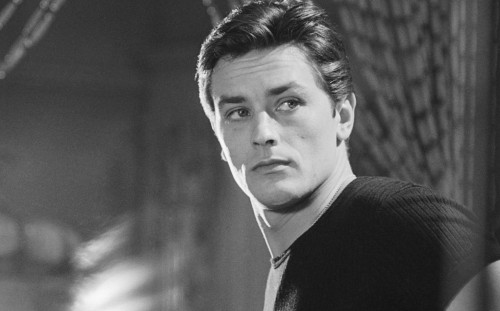
Scene from RASHOMON