






| |
|
|
|
|
|
|
|
|
Bells; trilled flutes; choral chanting; penny whistles; snare drums; integrated sound effects;
soaring, wordless soprano solos. Ever since ENNIO MORRICONE (born 1928) used that flute
to introduce Clint Eastwood in A Fistful of Dollars (though he’d already scored more than 20
pictures), he has been the most distinctive, most influential, and most imitated
film composer of our time. Perhaps most closely associated with the classic
Westerns of Sergio Leone (his primary school classmate!), he’s composed music
for every conceivable genre (Westerns actually account for a very small percentage
of his output) and a diverse group of moviemakers, everyone from Bernardo
Bertolucci, Pier Paolo Pasolini and Terrence Malick to Dario Argento, Mario Bava
and Sam Fuller. In the process, Morricone has garnered every known award for film
music — except, curiously, an Oscar. Anyone listening?* |
RELATED EVENTS |
|
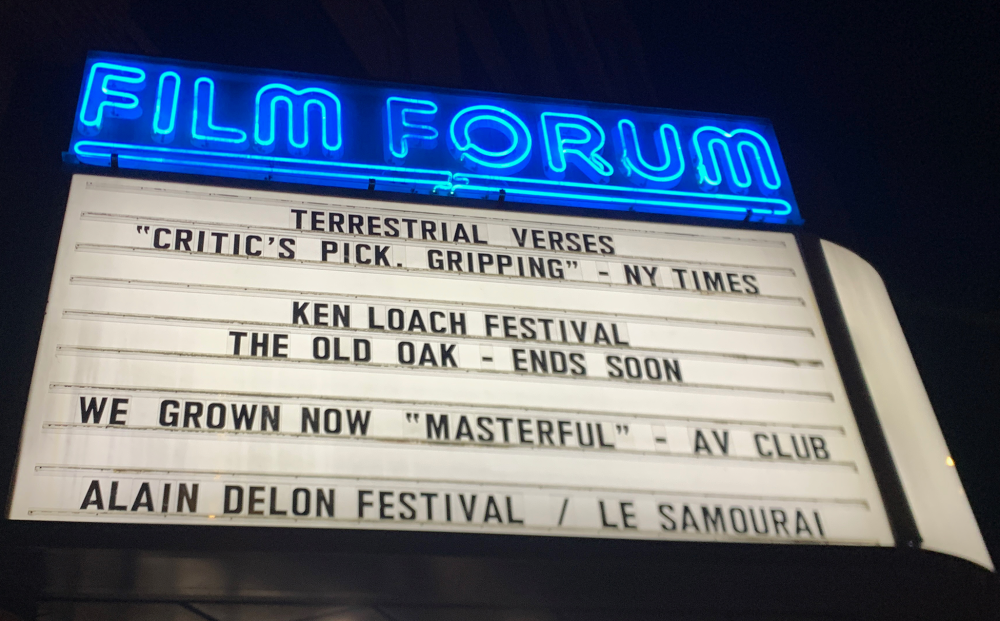
Anthony Lane on Morricone in The New Yorker “DON'T MISS! The composer brings his bells, whistles, and twang to a well-chosen 26-title retrospective.” “Morricone and Leone is the greatest entwining of composer and director in the history of cinema.” “When Mr. Morricone's compositional extravagance meets its directorial match, as it did in every one of his six collaborations with Leone as director and most of the films in Film Forum's Morricone retrospective, it's hard to pinpoint precisely where one artist's contribution ends and the other begins... When a director's ingenuity fell short of his own, Mr. Morricone filled the gap. When a director was equal to the task, as in the Leone films, the results were transcendently beautiful.” “Maestro Morricone is startlingly prolific...Audiences respond to the operatic sweep of themes like the ones Morricone wrote for Once Upon a Time in America. Musicians prize the ingenuity of his writing: the unexpected harmonic turns, the odd meters, the use of silence and wide spaces between instruments. Meanwhile hipsters and producers delight in the almost sardonic themes he wrote for films like Investigation of a Citizen Above Suspicion and the striking, sample-ready timbres he has invented... In the films that established his reputation in the 1960s, the series of spaghetti westerns he scored for Mr. Leone, Mr. Morricone’s music is anything but a backdrop. It’s sometimes a conspirator, sometimes a lampoon, with tunes that are as vividly in the foreground as any of the actors’ faces.” FEBRUARY 2/3 FRI/SAT
Click here for more information about INVESTIGATION OF A CITIZEN ABOVE SUSPICION “Alongside such inscrutable legends as Dostoevsky's Raskolnikov and Camus's Mersault broods the unnamed police inspector at the center of Petri's Oscar-winning film, driven by Gian Maria Volonte's peerlessly oleaginous performance and a metronomic Morricone score.” FEBRUARY 4 SUN (1968, SERGIO LEONE) Revenge-bent Charles Bronson stalks kid-blasting villain Henry Fonda (!) with the aid of good-bad-man Jason
Robards, as the railroad marches relentlessly westward through
the land of hooker-turned-earth-mother Claudia Cardinale.
Featuring one of Morricone’s greatest scores — written before
shooting began: Leone choreographed the actors’ movements to
the playback. Click here for more information about ONCE UPON A TIME IN THE WEST including trailer “Leone's mythic summation work still packs a wallop and plays like a collection of the genre's greatest hits." FEBRUARY 5 MON ARABIAN NIGHTS (1974, PIER PAOLO PASOLINI) “The
truth is not revealed in one
dream, but in many. . .” The last and most visually spectacular of Pasolini’s trilogy, filmed
on location in Ethiopia, India, Nepal, Yemen and Iran, spins tales told
by Scherazade in 1001 Nights. Stories of princes and demons, hidden
treasures, love lessons, illicit pleasures and mysterious deaths are framed
by the saga of runaway slave girl Zumurrud (Ines Pellegrini) who, mistaken
as the first man to emerge from the desert, is hailed and adorned as “king”
of a great walled city — complete with opulent wedding to the prime
minister’s daughter — while her distraught young lover Nur Er
Din (Franco Merli) sets out in search of her. Grand Jury Prize, Cannes Film
Festival. Review: Medieval on Your Ass: by Ed Halter in the Village Voice "Pasolini meets Scheherazade in this lusty collection of vignettes-- easily the best of his three 'medieval tales'." FEBRUARY 6 TUE (2 FILMS FOR 1 ADMISSION) (1972, HENRI VERNEUIL) Jean-Paul Belmondo pulls off that last
big jewel heist, but that’s just the beginning as Omar Sharif’s
viciously corrupt cop decides he wants his own slice —
maybe 100%. Athens locations, hair-raising Belmondo
stunts, one of the all-time great car chases, and regular
Morricone collaborator Edda Dell’Orso’s wordless vocals —
what was that plot again? Returning APRIL 30 MON, showtimes: 1:45, 5:35, 9:25 (1967, MARIO BAVA) A Mod, Mod 60s
romp, as comic strip super-criminal
Diabolik (John Phillip Law) destroys Italy’s
tax records and steals a 20-ton radioactive
gold bar. "A trip not to be missed! Based on a popular Italian comic strip with a lurid look to match, the flick works fine as a mod crime film. But it's Morricone's psychedelic pop tunes, especially Bond-worthy credits number 'Deep Down.' will have you Watusi-ing for days!" - "A stylish sci-fi thriller, made with the visual panache that was the stock in-trade of ex-cameraman turned director Bava." “Delightfully outlandish . . . hits a
high note of fantasy worthy of Cocteau.” FEBRUARY 7 WED (2 FILMS FOR 1 ADMISSION) A FISTFUL OF DOLLARS (1964, SERGIO LEONE) Clint Eastwood can take a joke, but unfortunately his mule can’t,
and mayhem ensues in the first of Sergio Leone’s “Man with
No Name” series, with the non-eponymous hero hiring himself out
to each of the trigger-happy factions battling in the same desolate, seemingly
unpopulated desert town. The beginning of the “spaghetti Western”
cycle, and the star-making role for erstwhile “Rawhide”
second lead Eastwood. The producers of Kurosawa’s Yojimbo sued for plagiarism, though, as Leone pointed out, the story was essentially
Goldoni’s 18th-century play The Servant of Two Masters —
plus killings. Followed by For a Few Dollars More (see Feb. 15) and The Good, The Bad and the Ugly (see Feb.
16 and 17). NAVAJO JOE (1966, SERGIO CORBUCCI) When
outlaw Aldo Sambrelli gets a
tip about a train hold-up in
the works, looks like he can
give up the scalp-trading
business. But enter half-breed
Burt Reynolds, who’s really pissed off about his
murdered wife. The memorable Morricone score, attributed
to his Americanized alias “Leo Nichols,” was quoted in both
Kill Bill AND Election. FEBRUARY 8 THU (2 FILMS FOR 1 ADMISSION) (1972, DARIO ARGENTO) Things get out of hand fast when
drummer Michael Brandon confronts a very incompetent
stalker — but somebody’s taken a picture of it. Striking
visuals from later horror maestro Argento; a messy dispute
with Morricone made this their last
collaboration for 25 years. “Argento at his
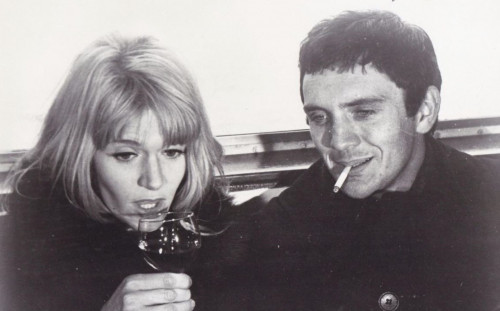
chilling best.” – NY Times. A QUIET PLACE IN THE COUNTRY (1969, ELIO PETRI) “Nymphomania,
Necrophilia, Fetishism, Sadomasochism.”
Pop artist Franco Nero can’t handle
the urban turbulence of Milan, so his
manager/lover Vanessa Redgrave arranges
a country sojourn. Only trouble is, the
deserted villa she’s found is seemingly
haunted by the spirit of a young
girl murdered at the end of WWII. The
ensuing madness is heightened by one of
Morricone’s most experimental scores —
and one of his own personal favorites. “Will
absolutely nail you to the seat.” – NY Times. "Nymphomania, Necrophilia, Fetishism, Sadomasochism? All that and Vanessa Redgrave. Sounds like a job for the horn section." FEBRUARY 9/10 FRI/SAT (1965, GILLO PONTECORVO) Algiers, 1957. French paratroopers
inch their way through the Casbah to zero in on the hideout of
the last rebel still free in the city. Flashback three years
earlier, as the Algerian National Liberation Front decides on
urban warfare. Thus begin the provocations, assassinations,
hair-breadth escapes, and reprisals; and massive, surging
crowd scenes unfolding with
gripping realism: many of the
sequences were shot and
edited to the driving prerecorded
score by Pontecorvo
and Morricone. Winner, Grand
Prize, Venice Film Festival. Click here for more information about THE BATTLE OF ALGIERS including film trailer “Bursts into a rattle of drums, as French troops head into the Casbah in search of their insurrectionist foes. . This is Cinema Inferno, and Ennio Morricone, conjuror of the beautiful, is right there in its midst.” FEBRUARY 11 SUN The Uncut Version! (1969, GILLO PONTECORVO) On a
Caribbean island in the 1840s, Marlon Brando’s ambiguously-motivated
British agent provocateur helps the black slaves in a
revolt against their Portuguese overlords. But he returns ten
years later — to suppress it. Complete Italian-language version.
“No one, with the possible exception of Eisenstein, has ever
before attempted a political interpretation of history on this epic
scale.” – Pauline Kael. “Morricone’s score employs the choral
harmonies and modalities of Gregorian chants with a
syncopated beat that has you just about leaping out of your
seat.” – Amy Taubin, Film Comment. In Italian, with English subtitles Click here for more information about BURN! “One of Brando's subtlest and most unnerving performances.” FEBRUARY 12 MON (2 FILMS FOR 1 ADMISSION) REVOLVER (1973, SERGIO SOLLIMA) Prison warden Oliver Reed has problems:
somebody’s snatched his attractive young wife, their price the
release of two-bit crook Fabio Testi; but then Reed smells a rat.
Charismatic lead performances, striking photography, and one
of Morricone’s most dazzling — and least known — scores key
this action-packed sleeper. THE WITCHES (1967, VITTORIO DE SICA, PIER PAOLO PASOLINI, FRANCO ROSSI,
LUCHINO VISCONTI, MAURO BOLOGNINI) Five directors, five
episodes, all starring Silvana (Bitter Rice) Mangano:
Visconti’s illustrates the perils of celebrity; Pasolini’s
features the legendary Totò; and in De Sica’s, a bored wife
tries to get a rise out of hubbie Clint Eastwood (!) via
comically romantic fantasy flashbacks. FEBRUARY 13 TUE (2 FILMS FOR 1 ADMISSION) THE BIG GUNDOWN (1966, SERGIO SOLLIMA) Bounty
hunter-with-a-heart Lee Van
Cleef is looking at a possible
Senate bid, courtesy of a
local moneybags, if he brings
in murderer-rapist Tomas
Milian. But en route to the
electrifying chase through a cane field climax, Van Cleef
starts wondering if Milian isn’t guilty. Arguably the best non-
Leone spaghetti Western, with a Morricone score that, “with
its ear-splitting cacophony mixed in with a little Beethoven,
sounds like Judgment Day” (NY Times). DEATH RIDES A HORSE (1967, GIULIO PETRONI) As choral chants and pounding kettle
drums throb in Morricone’s score (“among the maestro’s
most striking” – J. Hoberman), John Phillip Law takes after
the gang that massacred his family — all but him — fifteen
years ago; but then fresh-from-the-pen Lee Van Cleef, still
riled after being the fall guy, wants the same bunch, but for
the money, not the revenge. FEBRUARY 14 WED (2 FILMS FOR 1 ADMISSION) (1978, TERRENCE MALICK) 1916, and Chicagoans Richard Gere,
kid sister Linda Manz, and lover Brooke Adams head for the
Texas Panhandle to work the wheat fields of prosperous
farmer Sam Shepard. An ensuing marriage is only the
beginning of a bizarre love triangle, ending with violent death
amid a spectacular locust plague, and a Badlands-style
manhunt for a killer. Click here for more information about DAYS OF HEAVEN “Almost incontestably the most gorgeously photographed film ever made.” – Michael Atkinson, The Village Voice END OF THE GAME FEBRUARY 15 THU FOR A FEW DOLLARS MORE (1966, SERGIO LEONE) Weak moment for Clint Eastwood’s Man with No Name, as Lee
Van Cleef’s ex- Reb officer proves range can beat speed in a gunfight
— but then they team up to hunt ruthless killer Gian Maria Volonté
and all that bounty money. Most parodic of the trilogy, with highlights
including Volonté’s electrifying prison breakout (a stunt
he’d repeat in Melville’s Le Cercle Rouge); Eastwood
keeping score — by bounty money tallies — of the body
count; and Van Cleef striking a match off the hunched back of . .
.Klaus Kinski! "Features some of Morricone's most ominous, chime-laden cues--plus Gian Maria Volonte as a first-rate psychotic villain." FEBRUARY 16/17 FRI/SAT The Reconstructed Full-Length Version!* (1966, SERGIO LEONE) “If you’re gonna shoot, shoot! Don’t talk.” Lee Van Cleef’s icy bounty hunter (“The Bad”), Eli Wallach’s Mexican bandito (“The Ugly”) and Clint Eastwood’s con man (“The Good”) contend with each other and with battling Civil War armies in their relentless search for buried gold. Leone’s epic Western (accompanied by — Hwah, WAH, Wah — perhaps Ennio Morricone’s greatest score) conjures up opera, horse opera, the bullfight arena, and the blackest of black humor. This recent reconstruction of the complete version, including more than 15 minutes not in the already-classic original U.S. release, brought Eastwood and Wallach back to the sound studios to dub themselves for these previously un-Englished sequences. This full-length cut also refurbishes Tonino delli Colli's eye-stretch widescreen color vistas and features a newly-remixed 5.1 Dolby Digital soundtrack. Screenplay by Sergio Leone, Luciano Vincenzoni and the team of Age and Scarpelli (Divorce Italian Style, Mafioso). *Note: our printed calendar lists this as the “complete Italian version.” which may be misleading. This is a re-construction of the complete Italian release version, but all of the dialogue is in English. "Boasting the most instantly familiar score, Leone's three-way Mexican standoff is the ultimate rush in spaghetti Westerns."
FEBRUARY 18/19 SUN/MON (2 FILMS FOR 1 ADMISSION) (1987, BRIAN DE PALMA) Kevin Costner’s Eliot Ness goes all
out to bring down Robert De Niro’s Al Capone, assembling an
incorruptible team, with Sean Connery (Oscar, Best Supporting
Actor) as the Irish cop who teaches him the facts of Chicago life
and the elaborate shootout on train station steps (an homage
to Eisenstein’s Potemkin) an action
highlight. Morricone’s score garnered
one of his few Oscar nominations. MACHINE GUN MCCAIN (1968, GIULIANO MONTALDO) Back after
12 years in the pen thanks to
connected mobster Peter Falk, John
Cassavetes’ McCain gets set up for a
Vegas heist — only problem is, the casino is already mobowned.
And then the bodies start to mount up. Matchup of
Italian crime caper with the Cassavetes stock company: Falk, Val
Avery, and wife Gena Rowlands. The original Italian title was Gli
Intoccabili — The Untouchables! “For fans of the Cassavetes stock troupe having fun with tommy guns and broad accents." - Time Out New York FEBRUARY 19 MON BEFORE THE REVOLUTION (1964, BERNARDO BERTOLUCCI) Comfortably bourgeois Francisco
Barilli tries to reject his background, flirts with Communism,
has a passionate affair with his aunt Adriana Asti, but . . . Set
in his hometown of Parma, this was already the second feature
for the 22-year old Bertolucci, and his most autobiographical
— although also loosely inspired by
Stendhal’s Charterhouse of Parma.
With Morricone’s score “the most
imaginative since Jules and Jim”
(Pauline Kael). FEBRUARY 20 TUE (2 FILMS FOR 1 ADMISSION) “Never released on home video, the creepy 1982 Los Angeles thriller benefits enormously from the composer's serene washes, an ironic couterpoint to the movie's title character.” LUNA (1979, BERNARDO BERTOLUCCI) In the wake of her husband’s death,
opera star Jill Clayburgh takes her distraught son Matthew Barry
along on her latest Italian tour — Oedipus here we come. In
many ways Bertolucci’s most risk-taking film, as Freud meets
Verdi, with additional music by Morricone. FEBRUARY 21 WED THE COMPLETE DIRECTOR'S CUT! (1972, SERGIO LEONE) During the Mexican Revolution, peon Rod
Steiger and self-exiled Irish rebel James Coburn grudgingly
team up to knock over that Mesa Verde bank... with dynamite.
Aka A Fistful of Dynamite. Uncut version. Click here for more information on DUCK, YOU SUCKER "Duck, You Sucker has the composer reaching into the far depths of his creative grab bag; echoey 'Irish' voices for James Coburn's IRA backstory and whinnying shreiks for Rod Steiger's Mexican bandito. You will never hear a score like this again." FEBRUARY 22 THU ONCE UPON A TIME IN AMERICA THE COMPLETE DIRECTOR'S CUT! (1984, SERGIO LEONE) In Leone’s
massive 50-year saga of Jewish gangsters, his elegiac valedictory,
Robert De Niro and James Woods grow up and grow old in a
superbly-recreated period New York, with the director’s
characteristic violence and his most complicated time shifts.
De Niro had Morricone’s score played on the set to put him in
the mood. “Epic in every sense. . . A triumph of the pure art of cinematic storytelling.” – Sight & Sound |
||
ENNIO MORRICONE Film Music Volume 1 |
ENNIO MORRICONE Film Music Volume 2 |