













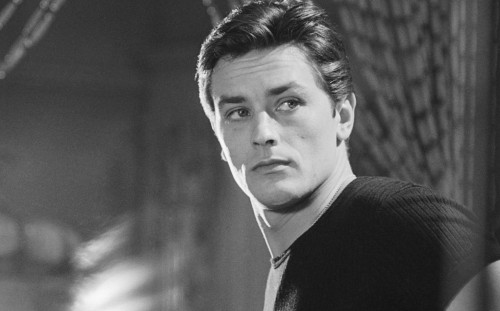
(1959-1961) Manchuria, WWII: well-meaning labor
boss Tatsuya Nakadai tentatively tries humane
methods in a raging barbed wire world of oppressed
workers, cruel Army superiors, and starved Chinese
POWs; then experiences the jaw-breaking brutality
of Imperial Army life (experienced first-hand by
director Kobayashi, who served six years in the
ranks, refusing promotion) and must pit rifle fire
against Russian tanks; and finally,
discovering the true face of “socialism”
from Soviet jailors, makes a desperate
break for it. Scathing, three-part exposé
of the Japanese occupation of
Manchuria and of the dehumanization of
the individual in war, with Nakadai’s
breakthrough performance, as he
moves from indecisive would-be liberal
to rock-hard leader of men, but so subtly
that his character remains consistent
throughout.
(He actually made other
films in between episodes, among them Yojimbo and Sanjuro; while playing cards
round the clock with Kobayashi, in order
to achieve the right degree of
haggardness for the final sequences.)
Once listed in Guinness as the longest
movie ever made, with dazzling b&w
Scope photography (by Yoshio Miyajima,
D.P. of Kwaidan, Harakiri, etc.), featuring
the greatest cloudscapes on screen, and
an enormous supporting cast that’s
practically a Japanese movie Who’s Who — from Seven Samurai’s woodchopping Minoru Chiaki (going
mouth-foamingly nuts in his foxhole), to Tora! Tora!
Tora!’s So Yamamura beheading prisoners, to Ozu
legend Chishu Ryu (Tokyo Story) and super-star
Hideko Takamine as Chinese peasants — The
Human Condition was the dream project
and masterpiece of Japan’s titan of
socially critical cinema, Masaki
Kobayashi. And, it is, thanks to his
narrative expertise, tremendously
absorbing — every minute of its almost-10-hour running time. Each part can
easily stand on its own; all-night
screenings in Japan of the complete work
have drawn overflow crowds. “An epic, or
the word has no meaning. . . awesome in
ambition and achievement” – David
Shipman. “A masterpiece, one of the
cinema’s handful of truly great
productions . . .The hero seems the
embodiment of the world’s conscience.”
– Derek Hill. “Nakadai had a quality, an
ability to characterize the sensibilities of
two strikingly different generations. When
I made The Human Condition, most
actors at that time were either of the
prewar or midwar generation. I was
looking for a person who could convey
the feeling of the new generation. Nakadai was able
to combine his traditional shingeki background with
the fresh innocence and energy of our postwar
generation. He could thus effectively represent both
pre- and postwar people.” – Kobayashi.
A JANUS FILMS RELEASE.