











FILM FORUM ONLINE TICKETS | MEMBERSHIP | NOW PLAYING | COMING SOON | TABLE OF CONTENTS
FAQ | ART & MERCHANDISE | FILM SOURCES | SPECIAL EVENTS | SEARCH | LINKS | HOME

FRI, SAT & SUN, JANUARY 18, 19 & 20
DOUBLE FEATURE with BOB LE FLAMBEUR
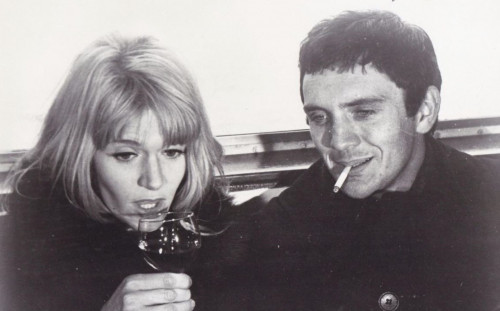
NEW 35mm Print! Jules Dassin's RIFIFI Still from RIFIFI

"For lovers of tough-guy moviemaking,
RIFIFI really means perfection."

- New York Times, 7/16/2000

RIFIFI, Jules Dassin's 1955 masterpiece of French film noir, will be re-released nationally by Rialto Pictures this summer beginning with an opening on July 21 at Film Forum in New York. Virtually unseen since its original release, Rialto's stunning new 35mm prints feature new subtitles capturing the flavor of the original French argot for the very first time.

Blacklisted Hollywood exile Dassin - raised in the Bronx - went to France and turned a Spillane-esque potboiler by Auguste le Breton into an existential heist film that earned him the Best Director prize at Cannes and set the standard for screen robberies for decades to come. Jean Servais is poker-faced gangster Tony Le Stéphanois, back from prison after taking a rap for Jo le Suédois (Carl Möhner), and ready to settle a few scores. First up is former mistress Mado (Marie Sabouret), whom he strips and whips in one of the most shocking scenes of any era; then it's on to masterminding a jewelry heist with comrades Möhner, Robert Manuel, and safecracker "César the Milanese" (director Dassin himself using the pseudonym "Perlo Vita") before the gang is undone by crime and circumstance.

A worldwide smash, RIFIFI was one of the first films to transcend the crime genre with its groundbreaking juxtaposition of sudden violence, casual humor, and unsavory sexual situations, as well as its generally amoral outlook - including the depiction of a drug addict and the realistic depiction of criminal methodology - all of which led to its condemnation by the Legion of Decency, its outright banning in several countries, and an enduring place in the pantheon of Film Noir. The famous robbery scene - a tense 30-minute sequence without dialogue or music - went on to become an obvious influence on films from Reservoir Dogs to Mission: Impossible 2, and the word "Rififi" was subsequently stolen for titles of various non-related thrillers. Philippe Agostini's gorgeous location shooting provides an invaluable time capsule of Paris in the 50s, and this stunning new print restores the film's visual luster while boasting new argot-elucidating subtitles by Lenny Borger (in collaboration with Bruce Goldstein and - in a subtitling first - the director himself), including the first translation ever of the title-explaining song, chirped by slinky chanteuse Magali Noel, still sexy twenty years later in Fellini's Amarcord.

RIFIFI will be shown as a Double Feature - with BOB LE FLAMBEUR

RETURN TO GREATEST HITS FILM SERIES
RETURN TO TOP
Back to RiFiFi


Still from Jules Dassin's RIFIFI

PRODUCTION CREDITS

Director: Jules Dassin
Screenplay: Jules Dassin
with the collaboration of: René Wheeler and Auguste le Breton
Based on the novel by: Auguste le Breton
Dialogue by: Auguste le Breton
Director of photography: Philippe Agostini
Production designer: Alexandre Trauner
Art Director: Auguste Capelier
Music: Georges Auric
Song ("Rififi"): Jacques Larue (lyrics) and Philippe-Gérard (music)
Production Manager: René Gaston Vuattoux
Subtitles (2000): Lenny Borger with the collaboration of Jules Dassin and Bruce Goldstein
English song adaptation Lenny Borger
Richelle Dassin and Bruce Goldstein
Executive Producers: Henri Bérard
Pierre Cabaud
René Bézard

Produced by Indusfilms - Primafilm - Pathé Cinéma
A Gaumont Film
Principal Photography: September 22 - December 21, 1954
Exteriors: St-Rémy-les-Chevreuses and Paris

Paris release: April 13, 1955
New York release: June 5, 1956, Fine Arts Theatre (128 E. 58th St.)
Aspect ratio: 1.33:1
Running time: 118 minutes

Still from RIFIFI A RIALTO PICTURES RELEASE

RETURN TO GREATEST HITS FILM SERIES
RETURN TO TOP
Back to RiFiFi


CAST

Tony le Stéphanois* Jean Servais
Jo le Suédois (Joe the Swede): Carl Möhner
Mario Farrati: Robert Manuel
César le Milanais: Perlo Vita [Jules Dassin]
Mado: Marie Sabouret
Louise: Janine Darcey
Ida Farrati Claude Sylvain
Pierre Grutter: Marcel Lupovici
Louis Grutter Pierre Grasset
Rémi Grutter: Robert Hossein
Viviane: Magali No'l
Tonio Dominique Maurin
Teddy the Levantine Teddy Bilitis
Charlie: .Emile Genevois
Poker Player: Fernand Sardou

* "The Stéphanois" is Tony's gangland nickname. Tony is "from Saint-Etienne," just as César the safecracker is "the Milanese" and Jo "the Swede." Saint Etienne (=St. Stephen) is an 11th century city in central south France, southwest of Lyons. It was long one of France's leading mining centers. Amusingly, in the subtitles of the original U.S. release version, the protagonist is identified simply as "Tony Stephanois!"

RIFIFI (ri-f"-fi) n. French argot. 1. Quarrel, rumble, free-for-all, open hostilities between individuals or gangs, rough-and-tumble confrontation between two or more individuals. 2. A tense and chaotic situation involving violent confrontations between parties.

Etym.: probably derived from rif "combat," Italian argot ruffo "fire," Latin rufus "red." Since 1942: Paris underworld slang coined by Auguste Le Breton during a gangland clash in 1942 and popularized in his novel "Du rififi chez les hommes" (Paris: Gallimard, 1953) and the film directed by Jules Dassin (1955). The enormous popularity of that movie led to the use of "rififi" in the titles of several unrelated thrillers.

RETURN TO GREATEST HITS FILM SERIES
RETURN TO TOP
Back to RiFiFi


SYNOPSIS

After serving a five-year stretch which has destroyed his health, Tony the Stéphanois returns to Paris to find his world changed. The underworld look down on him now and his ex-girlfriend, Mado (Marie Sabouret), has abandoned him to shack up with Pierre Grutter (Marcel Lupovici), a Montmartre nightclub owner and police informer. Only his young protégé, Jo the Swede (Carl Möhner), remains faithful to the weary, penniless gangster. Tony is the godfather of Jo's five-year old son, Tonio, and it was to spare Jo and his family that Tony took the rap for a robbery five years earlier.

Anxious to restore Tony's reputation, fortunes and self-esteem, Jo and Mario Ferrati (Robert Manuel), a voluble Italian pimp, plot a daring daytime robbery of a jewelry shop window on the fashionable Rue de la Paix. At first, Tony turns down the offer ("I don't run so fast anymore") but after a brutal, half-hearted attempt to get revenge for Mado's betrayal, Tony decides he's interested after all - but on condition they go for the jackpot: the store safe, with its millions in precious gems. But to ensure success, they need an ace safecracker. Mario knows just the man: his compatriot, César the Milanese (Jules Dassin), who jumps at the chance to take part in a heist masterminded by Tony the Stéphanois.

For weeks, the foursome plans the robbery in great detail, casing the store and the surrounding streets. The obstacles are daunting: the store has "more alarms than a firehouse" and the establishment's new security system is reputedly foolproof. But at last they're ready: late one night, the band invade the empty apartment of the shop's owner, who lives directly over his establishment. Armed with tools of the trade, including an innocuous-looking umbrella and a fire extinguisher, they break through the shop ceiling and silence the alarm system, as César goes to work on the safe. At dawn, after hours of backbreaking, silent work, their efforts are crowned with success. Jo flies to London to negotiate the sale of the gems with a fence, Teddy the Levantine.

Meanwhile, the Milanese makes a fatal error. Involved in an affair with Viviane (Magali No'l), the lead singer of Grutter's nightclub "L'Age d'Or," he makes her a+present of a ring from the heist. Thinking it's a fake, Viviane shows it to Grutter, who's been offered a hefty reward by his police contacts for any leads to the thieves behind the sensational 240 million franc jewelry heist, ("the biggest take since the abduction of the Sabine women"). Putting two and two together, Grutter realizes that the Milanese is one of the jewel thieves. But rather than tell the police, Grutter decides he's going to retrieve the loot for himself.

Grutter and his razor-wielding, junkie brother Rémi (Robert Hossein) waylay the Milanese at gunpoint and intimidate him into putting the finger on Mario. The Grutters break into Mario's apartment, threaten the Italian and his girl, Ida (Claude Silvain). When they refuse to serve as bait to ambush Tony, Rémi cuts their throats.

Vowing to avenge their deaths, Tony slips into the Grutters' deserted nightclub, finding César still bound to a column. César admits to his cowardice, understanding that he's violated an underworld code and must die. "I liked you, Macaroni, I really liked you," Tony mutters before he squeezes the trigger.

More determined than ever to get the loot, the Grutters kidnap Jo's son Tonio, snatching him from his mother, Louise (Janine Darcey), in the middle of a busy Paris street. Jo, no less devastated than his wife, is ready to meet the kidnappers' demands, but Tony pleads with him to hold on, knowing full well that even if they hand over the loot, the Grutters stand to kill the boy anyway, since he can identify them. While Jo waits for the final phoned instructions from Grutter, Tony picks up the kidnappers' trail thanks to Mado, who, revolted by the kidnapping, comes to offer Tony her aid. She tells him of the country house Grutter is building in a distant Paris suburb and where the child is probably being held. By tricking Rémi's drug supplier into taking an emergency dope delivery out to the house, Mado puts Tony on the trail that leads him to the kidnapped child.

Tony follows the drug supplier out to the Grutter hideaway, but is unable to phone in to Jo with the news. Meanwhile, Grutter calls Jo with the final instructions to deliver the money to the country house. Without news of Tony, Jo's nerves crack; he rushes out of the door to deliver the ransom money. Tony reaches the Grutter's isolated house, shoots Rémi, who is guarding the child, and drives off with Tonio. When Tony finally calls in and learns that Jo has just run out the door with a suitcase, he leaves the child in a cafe and drives back to the hideout. Too late, Grutter has lured Jo into a trap and murdered him. Tony shoots Grutter, who mortally wounds Tony before dying. Summoning up his remaining strength, Tony drives back to Paris with the money and the boy.

When the car finally comes to a stop in the street outside Jo's apartment, Tony is slumped dead over the steering wheel. Louise gathers her child in her arms as police retrieve the suitcase from the backseat.

RETURN TO GREATEST HITS FILM SERIES
RETURN TO TOP
Back to RiFiFi


PRODUCTION NOTES

When Jules Dassin directed Du Rififi chez les hommes in Paris in 1954, he knew it was probably his last shot at making a film comeback after being named as a communist before the House Committee on Un-American Activities in 1952.

The long arm of McCarthyist America had successfully crushed several earlier attempts by Dassin to rebuild his shattered film career in Europe. The most notorious example of this transatlantic persecution came in 1953, when the producers of a new vehicle for comedian Fernandel, Public Enemy No. 1, fired Dassin as director just days before he was to begin shooting (1). The incident became a cause célèbre in France, where an industry support group was led by Jacques Becker (shortly to direct his own seminal gangster opus, Touchez pas au grisbi).

Months later, Dassin was in Rome, working on an adaptation of Giovanni Verga's Sicilian literary classic, Mastro don Gesualdo, but it was sabotaged via interference from the American Embassy. It was there that Dassin received a call from an agent asking him to return to Paris to meet producer Henri Bérard, who had acquired the rights to a best-selling crime novel by newcomer Auguste le Breton, Du Rififi chez les hommes. Dassin's Naked City had been a major success in France and Bérard flattered Dassin by saying no one else but Dassin could do Rififi.

But there was a major obstacle. "I got along in French, but the book's slang was a new language, " Dassin recalls. "So I called an agent friend, Claude Briac, and asked him to come over and translate it for me. It was a weekend, Friday or Saturday, and I had to give the agent my answer on Monday. But Briac had been courting the same dame for years and she'd finally promised to meet him that Sunday. But I said, 'No, come and read to me.' And the poor bastard did!"

Dassin admits he loathed the novel. He was repelled in particular by the story's inherent racism: the rival gangsters pitted against the story's heroes were Arabs and North Africans. "I was appalled. They were doing all kinds of horrible things, not stopping at necrophilia. On Monday I went to the agent intending to tell him, 'I can't do this!', and instead I heard myself saying, 'Oh, yeah, I want to do it!' I needed the work."

Working under pressure, Dassin wrote the screenplay in six days (veteran screenwriter René Wheeler then helped rework the material back into French). Dassin built up the friendship between Tony the Stephanois and his protégé Jo the Swede and downplayed the turpitude of the rival gangsters who became Europeans with the more Germanic-sounding name of Grutter.

More importantly, he devoted quasi-documentary attention to the actual jewel heist, which was a mere 10-page throwaway early in le Breton's 250-page source novel. "That was the only way to work my way out of a book that I couldn't do, wouldn't do." In the final film, the caper would take up a quarter of the film's two-hour running time and become a classic set piece which would spawn innumerable imitations.

As might be expected, Dassin's screenplay displeased Le Breton, whom the producer had hired to write the dialogue. "Le Breton was really a character. I believe he had done time in jail or reform schools. And he loved to play the gangster as he saw the gangster played in American movies, with the hat and the manner. I found him rather amusing. When he read my script he came to see me and said: "Where's my book?" I tried to explain that's how it is when you adapt a book, and he took out a gun and plunked it down on the table, and repeated, "Where's my book?" I looked at him, I looked at the gun and I began to laugh. And because I laughed he took me in his arms and we became friends." (2)

As he had done for San Francisco, New York and London, Dassin, with the aid of cinematographer Philippe Agostini, turned Rififi into a sort of cinematic city symphony, revealing a broodingly beautiful Paris most French directors had always overlooked. "I remember walking the streets of Paris and dictating to a secretary, 'We'll do this scene here and this one there, just really improvising as we walked. When you make a picture, and you do locations, you gotta walk.'"

Working with what he remembers to be a risible $200,000 budget, Dassin could not afford stars (as Becker could in Touchez pas au grisbi, which owed much of its success to Jean Gabin). He had to make do with second-best but the lack of major names above the title served the film's gritty realism. The tubercular and world-weary Tony the Stéphanois was memorably acted by the Belgian-born Jean Servais (1910-1976), who had been in pictures since the early talkies but whose career had gone into a slump due to drinking problems. Servais's ravaged looks and deep melancholic voice gave Tony a tragic grandeur that made one critic call Rififi a "Greek tragedy in Pigalle."

The high-spirited Italian gangster Mario Ferrati (a cynical pimp in Le Breton's novel) was played by Robert Manuel (1916-1995), a beloved member of the Comédie-FranÁaise, where Dassin saw him in one of his specialty comic roles. As Jo the Swede, Dassin, acting on a suggestion by the producer's wife, cast Carl Möhner, a young Austrian-born stage and screen actor. (Both Servais and Möhner would work again under Dassin's direction in his next film, He Who Must Die, again produced by Bérard).

Using the pseudonym Perlo Vita, Dassin himself stepped into the shoes of César the Milanese, the Italian safecracker whose weakness for women unleashes the tragic chain of bloodletting. "We had cast a very good actorin Italy, whose name escapes me, but he never got the contract! When I called him, on a Thursday, I think it was, and we were shooting on Monday, he said he was wrapped up in another film. So I had to put on the mustache and do the part myself."

Among the supporting cast were two young players whose careers were launched by Rififi. The slangy, parodical "Rififi" theme song was delivered by Magali No'l, one of the most popular sex kittens of French and Italian films of the 50s and 60s (she would later become a favorite Fellini icon in the maestro's La Dolce Vita, Satyricon and Amarcord). As for young stage actor-director Robert Hossein, who played the razor-wielding junkie Rémi Grutter, it was the beginning of a long line of violent sociopaths and brooding anti-hero roles, before he abandoned the cinema for the stage (3).

If Dassin's cast was not bankable box office, his technical collaborators were the cream of the crop. In addition to cameraman Agostini, he also had "one of the greatest men in the history of cinema": production designer Alexandre Trauner, whose credits had included everything from Buñuel's L'Age d'Or (which has an homage in Rififi as the name of the nightclub) to the staggering sets for Marcel Carné's The Children of Paradise. Because of his reputation as a perfectionist, says Dassin, Trauner had done little of real import locally since the costly fiasco of Carné's first postwar film, Les Portes de la nuit. Eager to demonstrate he was not a ruinous collaborator, and out of friendship for Dassin, Trauner did the sets for Rififi for "almost nothing." (Trauner later had an even more successful career in Hollywood, where he designed several films for Billy Wilder, including The Apartment.)

Dassin's other great artistic collaborator was composer Georges Auric, who had written one of the first great sound scores for René Clair's A Nous la liberté. But at first Dassin and Auric could not agree on the scoring of the famous caper scene. "Auric was a wonderful guy. When I said I didn't want any music during the big caper scene, he and Bérard went nuts. Auric said: "Look, I'll tell you what, I'm going to protect you, I'm going to write the music for the scene anyway, because you need to be protected." And he went and scored the entire sequence! When the film was all done, I called him and said, 'I'm going to run the film for you, once with the music and once without.' And afterwards, Auric came out and said: "Get rid of the music!"

Today Dassin admits he somewhat regrets the Rififi theme song, which parodies the underworld slang Le Breton helped introduce into French gangster movies of the 50s. Although nightclub numbers were a convention of film noir of the 40s and 50s, the song was really there to explain to audiences the meaning of the film's title, "Rififi," which ironically, is never uttered by any of the characters [4]. It was written in two days by lyricist Jacques Larue and composer Philippe-Gérard after Dassin nixed a proposal by Edith Piaf-collaborator Louiguy (the author of "La Vie en rose"). Dassin had also interviewed a young songwriter-singer who was struggling to overcome the handicaps of a sickly-looking appearance and strange voice. Bérard told Dassin not to bother with him, that he wouldn't come to anything. Dassin complied. The songwriter was Charles Aznavour.

Dassin remembers the film being made in "a marvelous atmosphere of friendship. My problem was that I hadn't made a film in such a long time I was terribly nervous in the beginning and I had to fight for people not tosee it. The only serious tensions came from the producer because I didn't want to shoot in sunlight, I waited for gray days, which may have extended shooting time. It drove him mad."

Amusingly, Bérard was also frustrated by the film's lack of "rififi!" The big man in French commercial pictures at the time was Yank expatriate singer-actor Eddie Constantine, who was then starring in a hugely successful series of comedy thrillers as Lemmy Caution, the quick-fisted, hard-drinking G-man imagined by British crime novelist Peter Chesney. "Bérard insisted that I throw in scenes of fist fights like in the Constantine pictures. He'd keep insisting, 'Where are the fights, where are the fights?' and I'd say, 'Well, next week, next week!'

Against all odds, Du Rififi chez les hommes was a smash hit from its Paris first-run in April 1955, a success ratified that same month when the jury at the Cannes Film Festival awarded Dassin the directing prize. Dassin's reputation was restored, along with his financial situation: with Bérard unwilling to give him anywhere near a decent salary, Dassin had agreed to a percentage of the box office take!

Despite the ignominious attempts from Hollywood to stop Dassin from working, Rififi enjoyed an enviable art house career in the United States, first in a subtitled version, then in a dubbed re-release (re-titled "Rififi Means Trouble!"). Typically, the film did draw fire from the Roman Catholic Legion of Decency, which slapped a C ("condemned") rating on it, but after three brief cuts and the addition of an opening title card consisting of a quote from the Book of Proverbs (6), Rififi was upgraded to the B category (morally objectionable in part for all). The Rialto Pictures re-release is of the original, uncensored version (minus the Biblical quotation, however).

The Rififi adventure had a curious minor coda years later, when Dassin ran into director Jean-Pierre Melville one day in Paris. "Melville virtually cold-shouldered me. It was only afterwards that I found out why: He had been promised Rififi chez les hommes but Bérard had double-crossed him!" [6]

Melville exorcised this early professional disappointment in 1969, when he directed his most successful film, Le Cercle Rouge (The Red Circle), a highly stylized makeover of the Rififi story, which included a long, silent caper centerpiece! Coincidentally, Le Cercle Rouge, which stars Yves Montand and Alain Delon, is a future Rialto Pictures release.

- Lenny Borger (all quotations from Jules Dassin are from a telephone interview conducted by Borger on May 15, 2000)

RETURN TO GREATEST HITS FILM SERIES
RETURN TO TOP
Back to RiFiFi


NOTES

(1) Pressures were exerted on Fernandel's co-star Zsa-Zsa Gabor and producer Jacques Bar, who was told in no uncertain terms that if Dassin made the film, neither it nor any successive Bar production would ever be released in the U.S. The film was finally directed by Henri Verneuil and exported as The Most Wanted Man.

(2) Le Breton died in 1999, virtually forgotten. He did not live to see the re-release of Rififi in French theaters for the first time in 20 years last summer. Dassin says their friendship remained intact to the end.

(3) Hossein's current reputation rests on a series of sprawling theatrical extravaganzas (usually staged in stadiums) drawn from literature, motion pictures and history. In addition to the original Paris production of the hit musical, Les Misérables, Hossein theatricalized the revolt of the battleship Potemkin, the French revolution, the life of Jesus and literary classics like Notre Dame de Paris.

(4) The term "Rififi" was subsequently used in the titles of several completely unrelated French thrillers, including Du rififi à Tokyo (1962), Du rififi à Paname (1966), and even Du Rififi chez les femmes (1959), all co-written by Rififi creator Auguste LeBreton. Other countries used "rififi" to re-title foreign films for instant audience recognition, so the American heist comedy Who's Minding the Mint? (1967) became Rifif" à la americana in Spain; The Long Good Friday (1980) became Rififi am Karfreitag in West Germany; and the celebrated Italian caper movie Big Deal on Madonna Street (1958) became Rufufu in Spain!

(5) "When the wicked are multiplied, crime shall be multiplied: but the just shall see their downfall." Proverbs, 19:16

(6) According to Rui Nogueira's Melville, a book-length interview with the director published in 1971, Melville's displeasure was with the producer, and not with Dassin. Melville's account: "I was the person who got the producer to buy the rights, he announced that I was to direct the film, and then I didn't see him for six months. Finally the film was made by Dassin, who had the extreme courtesy to say that he would do it only if I wrote to tell him that I was happy about the arrangement. Which I did."

RETURN TO GREATEST HITS FILM SERIES
RETURN TO TOP
Back to RiFiFi


WHAT THE CRITICS SAID ABOUT "RIFIFI"

"Makes the characters in Mickey Spillane seem like sissies The keenest crime film that ever came from France but there is also a poetry about it Has a flavor of crooks and kept women and Montmartre "boites" that you can just about smell."
-- Bosley Crowther, New York Times (June 6, 1956)

"A corker The half-hour burglary makes the hairs on the back of the neck rise."
-- Bosley Crowther, New York Times (June 10, 1956)

"Indubitably the best underworld story yet filmed If you crave an underworld story that will hold you in an iron grip, Rififi shouldn't be missed. In our opinion, it is the best foreign film seen this year."
- Justin Gilbert, Daily Mirror (1956)

"Rififi contains a 30-minute stretch of wordless movie making that is one of the most engrossing sequences since the invention of talking pictures: [Dassin] gathers enough honors in this memorable silent sequence to satisfy most writers, directors and actors for a lifetime of work."
-- Time (July 16, 1956)

"A vicious and terse French melodrama Grimly sustained, never relaxing excitement, a classic exercise in keeping nerves stretched taut through ingenuity, imagination and low cunning."
-- Alton Cook, New York World Telegram (1956)

**** "Dassin's direction is tight and tense and sometimes the suspense is almost unbearable."
-- Wanda Hale, Daily News (1956)

"Sets a new high in suspense a piece of filmmaking that'll have you holding your breath when you aren't chewing your fingernails."
-- Rose Pelswick, Journal-American (1956)

RETURN TO GREATEST HITS FILM SERIES
RETURN TO TOP
Back to RiFiFi


FRANCOIS TRUFFAUT ON "RIFIFI"

Rififi, the first French film by the American filmmaker Jules Dassin, who came to cinema from directing in the theater, is structured like a classical tragedy. Act I: Preparation for a holdup; Act II: "Consummation" of the holdup; Act III: Punishment, vengeance, death.

It isn't necessary to point out the modest production budget of Rififi before I say that I liked the film and intend to praise it, but it may serve some purpose, if only to demonstrate that a film's success depends more on its director than on massive production resources or the participation of world-renowned actors.

Out of the worst crime novel I have ever read, Jules Dassin has made the best Film Noir(1) I have ever seen. In fact, this is not a minor genre. Dassin shot the film on the street during high winds and rain, and he reveals Paris to us [Frenchmen] as he revealed London to the English (Night in the City) and New York to the Americans (Naked City). It would be unfair not to credit also the chief cameraman, Agostini, who truly worked miracles under very unusual conditions: the interior shots in actual dark bistros, nighttime exteriors without lights, the platform of the Port-Royal subway station, tiny details of décor, etc.

Everything in Rififi is intelligent: screenplay, dialogue, sets, music, choice of actors. Jean Servais, Robert Manuel, and Jules Dassin are perfect. The two failures are the female casting and the specially written song, which is execrable.

The direction is a marvel of skill and inventiveness. Rififi is composed of three bits of rigorously developed bravura. Every shot answers the viewer's question, "How?" Dassin remains faithful to his style of combining the documentary approach with lyricism. For the past week, the only thing being talked about in Paris was the silent holdup, splendidly soundtracked, in which objects, movements, and glances create an extraordinary ballet around an umbrella placed over a hole pierced through the ceiling of a jewelry store alive with security systems.

Beyond that, the real value of the film lies in its tone. The characters in Rififi are not despicable. The relative permissiveness of the French censors allowed Dassin to make a film without compromises, immoral perhaps, but profoundly noble, tragic, warm, human. Behind the smiles of the three actors - Jean Servais' bitter, Robert Manuel's sunny, and Jules Dassin's sad though with bursts of gaiety - we divine the filmmaker, a tender, indulgent man, gentle and trusting, capable of telling us one of these days a more ennobling story of characters who have been better served by their destiny. That is what we must not forget and why we must thank Jules Dassin. It is this consideration that amply justifies the presence at the Cannes Festival of Le Rififi chez les Hommes.

RETURN TO GREATEST HITS FILM SERIES
RETURN TO TOP
Back to RiFiFi


JULES DASSIN

Born Julius Dassin, on December 18, 1911, in Middletown, Connecticut, one of eight children of a Russian Jewish immigrant barber, he moved with his family to the Harlem section of New York City and attended high school in the Bronx. After drama studies in Europe, he made his debut as an actor in 1936 with New York's Yiddish Theater. He later wrote radio scripts and in 1940 went to Hollywood, where, after a brief induction as an apprentice director at RKO (coming under Alfred Hitchcock's wing during the shooting of Mr. And Mrs. Smith), he began directing shorts for MGM. One of these, The Tell-Tale Heart (1941), resulted in his promotion to feature director. Although his films boasted big stars like Joan Crawford, Conrad Veidt, John Wayne, and Charles Laughton, his MGM pictures were inconsequential, mildly entertaining suspense and comedy fare, although the Laughton film, The Canterville Ghost, was a significant hit. In the late 40s he seemed to have at last found his stride with three dynamic on-location slice-of-life dramas, Brute Force, The Naked City, and Thieves' Highway (the latter two shot on location in their respective cities, New York and San Francisco) that earned him renown in Europe as the first American "neo-realist." But just as he was gaining recognition as a director with something to say and an interesting way of saying it, he was forced into exile in Europe as a result of the House Un-American Activities Committee hearings, in which he was identified as a Communist by Edgar Dmytryk.

Dassin's first stop was England, where he directed another intelligent film in his newfound semi-documentary style, Night and the City. But, because of the blacklist, it was five years before he would direct another movie. Luckily, it turned out to be the suspense gem Rififi. Accepting the Best Director prize at Cannes for that movie, he met the woman who would become his muse and second wife, the Greek actress Melina Mercouri. He began his Greek period in the 1960s with several entertaining films starring Mercouri, the best known of which, Never on Sunday, discovered the Mediterranean for Americans, won an Oscar for his memorable theme song, and a Best Actress award at Cannes for Mercouri. Topkapi, another commercially successful venture, was a colorful and highly entertaining jewel-robbery caper that inspired the tv series Mission: Impossible.

Dassin has produced and co-scripted most of his own films since 1950. He also appeared in several as an actor, sometimes using the pseudonym Perlo Vita.

Since 1980, he has been active as a theater director in Athens, frequently staging the plays of American authors. He lives today on Melina Mercouri Street in Athens, where he runs the Melina Mercouri Foundation.

FILMOGRAPHY

Nazi Agent, USA, 1942
The Affairs of Martha, USA, 1942
Reunion in France, USA, 1942
Young Ideas, USA, 1943
The Canterville Ghost, USA, 1944
A Letter for Evie, USA, 1946
Two Smart People, USA, 1946
Brute Force, USA, 1947
The Naked City, USA, 1948
Thieves' Highway, USA, 1949
Night and the City, USA/UK, 1950
Rififi (Du Rififi chez les Hommes), France, 1955
He Who Must Die (Celui qui doit mourir), France/Italy, 1957
La Legge (La Loi/Where the Hot Wind Blows), Italy/France, 1958
Never on Sunday, Greece, 1960
Phaedra, Greece/USA, 1962
Topkapi, USA, 1964
Summer, USA/Spain, 1966
Survival, USA/Israel, 1967
Uptight, USA, 1968
La Promesse de l'Aube (Promise at Dawn), France/USA, 1970
The Rehearsal, 1974
A Dream of Passion, 1978
Circle of Two, Canada, 1980

PREVIOUSLY AT FILM FORUM:
AN EVENING WITH JULES DASSIN

The legendary director will appear in person on Tuesday, October 9, at 8:00 pm, to discuss his stage career (starting with the Yiddish theater of the 1930s), his film career (from servitude at MGM to his own independently-produced films), the Hollywood blacklist, and his wife and muse Melina Mercouri, as well as his continuation of her lifelong dream: to bring the Parthenon Marbles back to Greece. Plus excerpts from many of his classic films including The Naked City, Topkapi, Never on Sunday and Rififi.

RETURN TO GREATEST HITS FILM SERIES
RETURN TO TOP
Back to RiFiFi


AUGUSTE LE BRETON (1913-1999)

Born Auguste Montfort in Brittany (hence his eventual name change), Le Breton was a war orphan, the son of a Barnum circus clown killed in the Somme in 1914. After a childhood in various homes, he spent much of his delinquent teen years in reform schools. Dubbed "Le Breton" by the delinquents and petty hoods he fell in with when he reached Paris in the 1930s, his peripatetic experiences brought him in contact with the numerous figures of the French milieu who would serve as models for his later literary creations notably Tony "the Stéphanois." He claimed to have coined the term rififi during a gangland clash in 1942.

With his contemporary Albert Simonin, author of the equally seminal gangster novel Touchez pas au grisbi (which appeared only months before Du Rififi chez les hommes in 1953 and was unforgettably filmed by Jacques Becker), Le Breton is considered the father of the argot crime thriller. Like Grisbi, Rififi was enriched by the author's first-hand knowledge of the Paris underworld and its rich, often impenetrable jargon. Indeed, Grisbi and Rififi were both published by Editions Gallimard as part of its famous "Série Noire" thriller collection with an appended glossary of underworld argot.

The huge double-barreled success of Rififi, book and film, kicked off Le Breton's career as novelist and sometime-screenwriter. He initiated a whole series of thrillers whose titles began with "Rififi " and followed the globe-trotting adventures of FBI agent Mike Coppolano. Among these, the 1967 Rififi in New York was published in translation in the U.S.

Of the nine Le Breton novels adapted for the screen, the finest, after Rififi, remain Henri Decoin's Razzia sur le chnouf (1955), starring Jean Gabin, and Pierre Chenal's Rafles sur la ville (1956), with Michel Piccoli and Charles Vanel. Henri Verneuil's 1969 caper thriller, The Sicilian Clan, boasting the powerhouse trio of Jean Gabin, Alain Delon and Lino Ventura, enjoyed international success. Other screen adaptations were La Loi des rues (Ralph Habib, 1956), Le Rouge est mis (Gilles Grangier, 1957), Du rififi chez les femmes (Alex Joffé, 1959), Du rififi à Paname (Denys de la Patellière, 1965) and Brigade anti-gangs (Bernard Borderie, 1965).

As scenarist and dialogue writer, Le Breton is most famously associated with Jean-Pierre Melville's gangster classic, Bob le flambeur (1956), another Rialto Pictures release (showing as a double feature with RIFIFI)

Le Breton's considerable literary output also included a series of autobiographical novels, poetry, memoirs, a portrait of Edith Piaf and three slang dictionaries.

He died last year, just weeks before the French theatrical reissue of Dassin's Rififi which he hoped would bring his work back to a new generation of thriller aficionados and filmgoers.

He is survived by an expression that remains part of the living language.

Pressbook notes by Lenny Borger
Edited by Bruce Goldstein

In the English version of this 1954 review in The Films in My Life, the collection of Truffaut's criticism translated by Leonard Mayhew (1975, Simon & Schuster), this line reads "Jules Dassin has made the best crime film I have ever seen." Truffaut's actual words are "Jules Dassin a realisé le meilleur film 'noir' qu'il m'ait été donné de voir." This may be one of the earliest critical uses of the term.

- RIALTO PICTURES

RETURN TO GREATEST HITS FILM SERIES
RETURN TO TOP
Back to RiFiFi


FILM FORUM ONLINE TICKETS | MEMBERSHIP | NOW PLAYING | COMING SOON | TABLE OF CONTENTS
FAQ | ART & MERCHANDISE | FILM SOURCES | SPECIAL EVENTS | SEARCH | LINKS | HOME
Questions/Comments? E-mail Film Forum. Box Office: 212-727-8110. Repertory screen is programmed by Bruce Goldstein. (Schedule subject to change). Contents and layout © 2003, Rialto Pictures LLC. All rights reserved. Not to be reprinted without permission. Website Manager: Richard J. Hutchins. This page was last updated on March 10, 2003 .