




FILM FORUM
MEMBERSHIPNOW
PLAYING
COMING
SOON
LINKSTHE
BASICS
ART &
MERCHANDISE
FILM
SOURCES
SPECIAL
EVENTS
HOME

ENDED

LENNY BRUCE:
SWEAR TO TELL THE TRUTH

LENNY BRUCE: SWEAR TO TELL THE TRUTH Written and Directed by Robert B. Weide
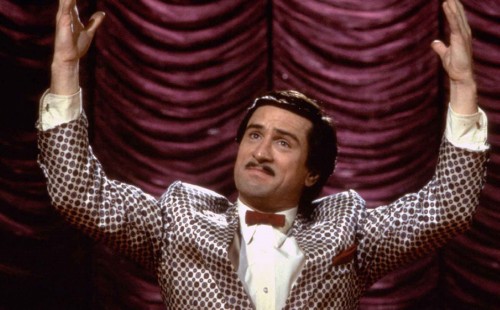
Narrated by Robert De Niro

USA, 1998
100 minutes

"The story is about much more than just a comic. It is about the way society treats non-conformists who threaten established values, the need to be vigilant about assaults against constitutional rights, and much more."
- Chip Deffaa, New York Post

In 1948. Lenny Bruce was just another comic who couldn't get arrested.
In 1948. Lenny Bruce
was just another
comic who couldn'
get arrested.
Excerpted from an article in The New York Times by Martin Garbus:
(Lenny) Bruce had begun performing his incendiary brand of stand-up comedy in the 1950's, attacking the political and religious icons of the day. From the beginning, he had trouble with law-enforcement authorities and was arrested in Los Angeles and Chicago.

By the end of 1963, he had become a special target of the Manhattan District Attorney, Frank Hogan, who worked closely with Francis Cardinal Spellman of the New York Archdiocese to clamp down on material they considered objectionable. Bruce's remarks about religion and religious leaders also enraged the Rev. Morton Hill, a Roman Catholic priest, and Rabbi Julius Neumann, both of New York.

By 1961....
By 1961.... all that would change.
...all that would change.
Shortly after performing his act at Cafe au Go Go (in New York City) in April 1964, Bruce was arrested by the NYC police and charged with violating a state criminal obscenity statute. Though it made no new law, this case would turn out to be the largest, costliest, most fiercely contested and widely publicized obscenity trial in American history. It was also the last of its kind in the U.S.
Lenny Bruce - Swear To Tell the Truth

The state's case rested on Bruce's use in his performance of a four-letter term for sexual intercourse. The turning point in the trial, held before a panel of three judges, came when Bruce testified that he had first heard the word four or five times in one sentence - as an adjective, a noun, a verb - while in the Army. The presiding judge, John Murtagh, said he had been in the Army in World War II for four years and had never heard the word. The courtroom burst into laughter. Conviction then was a certainty.

The Bruce trial became a public event, with extensive newspaper and magazine coverage. Norman Mailer, Lionel Trilling, Theodore Reik, William Styron and James Baldwin were among the prominent writers who filed a petition asking that the trial be stopped. Jules Feiffer, Nat Hentoff, religious leaders and Columbia University professors testified in support of Bruce.

Nonetheless, he was convicted and sentenced to four months in the workhouse, though he could have been sentenced to a year in prison. He was still awaiting a ruling on his appeal when he died - broken, crushed, penniless - of a drug overdose on August 3, 1966. He was never able to resume his career after the trial because so many club owners feared prosecution. His conviction was ultimately reversed by a New York appeals court.

The battle over censorship is extraordinarily important and still very much with us. If you cannot speak something, then you cannot think everything. While the country is freer today than it was, censorship today exists wearing many different clothes. It is more complex and in many ways more dangerous. We need a citizenry that pays attention to private groups to see why and how they attack books and films, to look into the dark crevices of their minds and actions. If we want to have a fear-free society, we must often fight former friends as well as enemies, to preserve free speech in our country.

Tough Talk : How I Fought for Writers, Comics, Bigots, and the American Way by Martin Garbus, Stanley Cohen (Contributor) Martin Garbus, a partner in the New York law firm of Frankfurt, Garbus, Klein & Selz, defended Lenny Bruce against obscenity charges in New York in 1964 and is the author of a recent memoir,"Tough Talk: How I Fought for Writers, Comics, Bigots and the American Way", with Stanley Cohen.(Hardcover, newly published by Time Books. )

Lenny Bruce on the Internet:

Return to top


MEMBERSHIPNOW
PLAYING
COMING
SOON
LINKSTHE
BASICS
ART &
MERCHANDISE
FILM
SOURCES
SPECIAL
EVENTS
HOME
FILM FORUM

Questions/Comments? E-mail Film Forum. Box Office: 212-727-8110.
Independent premieres at Film Forum are selected and programmed by Karen Cooper.
© 1999 & 2001, The Moving Image, Inc. All rights reserved. Not to be reprinted without permission.
Webmaster: Richard J. Hutchins. This page was last updated on February 12, 2001