











| ONLINE
TICKETS | MEMBERSHIP
| NOW
PLAYING | COMING SOON
| TABLE OF CONTENTS FAQ | ART & MERCHANDISE | FILM SOURCES | SPECIAL EVENTS | SEARCH | LINKS | HOME |
| PREVIOUSLY AT FILM FORUM |
|
|
Storytelling ingenuity, surrealistic imagination and sheer cinematic mischief are brilliantly intertwined... Moreau is superb in every way, but top honors go to Bunuel's subtly dreamlike telling of the tale. -- David Sterritt, Christian Science Monitor |
35mm SCOPE RESTORATION!
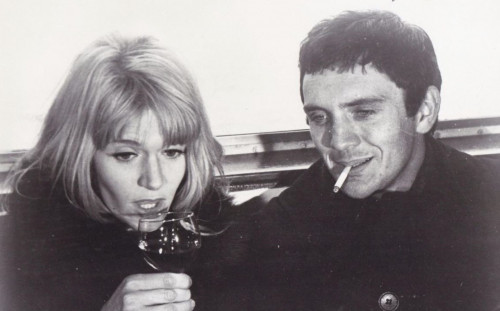
(1964) "The country is always a little triste,"
complains Parisian femme de chambre JEANNE
MOREAU en route to her new post at a provincial manor.
But maybe another adjective comes to mind when she checks
out the ménage: the foot fetishist paterfamilias ("I
want to see them live!" he exhorts, as she saunters about
in a choice pair of boots from his private stock); Michel
Piccoli's chain-smoking, endlessly frustrated son-in-law
("he's a dead loss," notes another domestic); the frigid,
fuss-budget daughter who conducts enigmatic chemical experiments,
and demands that Moreau remove her shoes before she dusts
the salon; the next-door neighbor who tosses garbage and
vituperation over the wall; and Georges Geret's fascist roughneck
manservant, who really enjoys slaughtering the geese.
Adapted from Octave Mirbeau's satiric 1900 novel (previously
filmed in Hollywood by Renoir, with Paulette Goddard),
we're obviously in Buñuel
country, although it's one of his more stylistically straightforward
works, with the action updated to the late 20s to provide
commentary on the rise of the right-wing Action Française
and the director's trademark surrealism eschewed in favor
of more realistic b&w cinematography, the Scope camera
gliding past sets stuffed with "priceless" tchotchkes.
A second-choice project for Buñuel after the Spanish
government nixed his first attempt at Tristana, the material
obviously proved congenial (the foot fetishism comes straight
from the book) and teamed the director for the first time
with producer Serge Silberman and co-scripter Jean-Claude
Carrière (here in a cameo as the priest a little too
interested in the daughter's sexual problems), collaborators
he would stay with for the rest of his career; while providing
him with a very Buñuelian ambiguity - is Moreau
coming on to a rapist/murderer because 1) she's trying
to trap him, 2) she's actually turned on, or 3) both? -
and a chance for belated revenge: the "Chiappe" the fascists
cheer at the end is the police commissioner who suppressed
his L'Age d'Or in 1930. Buñuel's most sardonically
realistic work has been stunningly restored by Studiocanal
in France from the original negative, with all new subtitles
by Lenny Borger, who most recently provided new translations
for Grand
Illusion and Rififi.
"Filming Jeanne Moreau was a great pleasure; when she walks,
her foot trembles just a bit on its high heel, suggesting
a certain tension and instability. She taught me things
about the character that I'd never suspected were there."
- Buñuel.
A Rialto
Pictures Release.
Links:
Selections from Amazon.com:
|
Contemporary |
French
New Wave |
Landscapes of Loss: |
(Not Shown) Stars & Stardom in French Cinema : In Depth Studies of Brigitte Bardot, Jeanne Moreau, Jean-Paul Belmondo, Juliette Binoche, & More by Ginette Vincendeau |
Buñuel |
An Unspeakable Betrayal: |
My Last Sigh |
Luis Buñuel |
Objects
of Desire: Conversations With Luis Buñuel by Jose De LA Colina, Tomas Perez Turrent (Contributor), Paul Lenti (Editor) |
| ONLINE
TICKETS | MEMBERSHIP
| NOW
PLAYING | COMING SOON
| TABLE OF CONTENTS FAQ | ART & MERCHANDISE | FILM SOURCES | SPECIAL EVENTS | SEARCH | LINKS | HOME |