











Classifieds Online Back to Home
Table of ContentsMedia and SocietyArts and EntertainmentOpinionsThe Financial Observer
| Arts&Entertainment 2001 THE NEW YORK OBSERVER, L.P.
The Awful Truth About Hollywood and Us

by Andrew Sarris

One Man’s love of Gambling, Another’s of a Woman

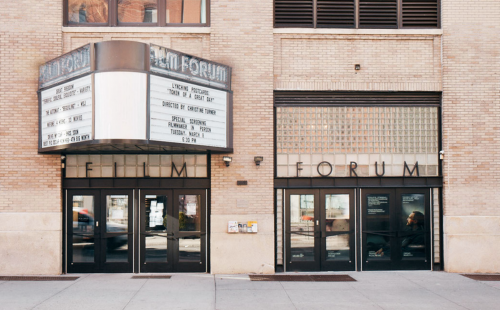
Jean-Pierre Melville’s Bob le Flambeur (1955), from a screenplay by Melville (1917-1973) and Auguste Le Breton, is a film that was far ahead of its time in the mid-50’s, both as a film noir and as a precursor of the nouvelle vague. It will be shown at Film Forum, 209 West Houston Street, from July 27 through Aug. 9, 2001.

I happened to see it in a retitled version as Fever Heat in a Times Square grind house, long before the whole area was transformed into a Walt Disney theme park. As I recall, the stills featured the moderately unclad charms of Isabelle Corey, a French pastry of the period. Ah, those were my salad days.

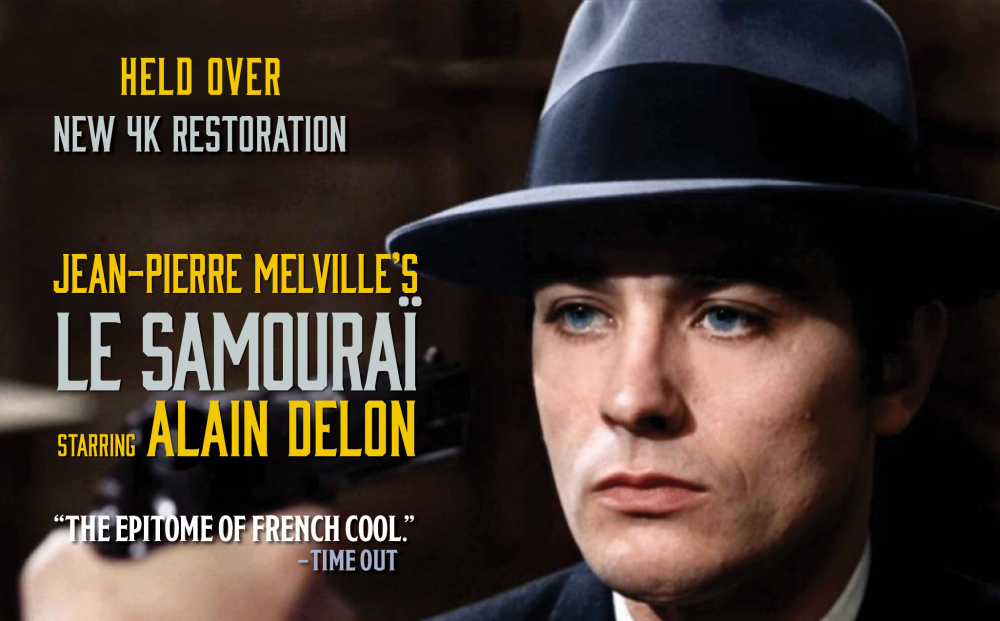
Melville’s location shooting in Montmartre and Deauville is drenched with the dark romanticism of his later crime classics, such as Le Doulos (1961), Le Deuxième Soufflé (1966), Le Samourai (1967) and Un Flic (1971). He also collaborated in 1950 with Jean Cocteau (1889-1963) on Les Enfants Terribles, an elegant filming of Cocteau’s stirringly neurotic play. The point is that Melville (self-named after his favorite American author) brought emotional depth and stylistic polish to the gangster genre.

Bob Montagné (Roger Duchesne) is a silver-haired ex-felon known as le Flambeur, a slang term for high-roller or compulsive gambler. He takes on the tutelage of a young hoodlum and helps plan a holdup in a Deauville gambling casino. At their moment of success, his gambling obsession takes over, with ironic results.

While we’re heading back down Memory Lane to the age of fully sifted auteurs, there’s another chance to look at Luis Buñuel’s That Obscure Object of Desire (1977), from a screenplay by Buñuel (1900-1983), with the collaboration of Jean-Claude Carrière, based on the novel La Femme et le Pantin by Pierre Louys (1898). The film is currently playing at the Lincoln Plaza Cinema.

One oddity in this production–that is, odd even for Buñuel–is the casting of two actresses, Carole Bouquet and Ángela Molina, to play the single character of the temptress Conchita Perez. Maria Schneider, Marlon Brando’s co-star in Bernardo Bertolucci’s Last Tango in Paris (1972) five years earlier, was found unsatisfactory by Buñuel, and so he decided to replace her with two actresses performing alternately in separate scenes. Buñuel claimed later that many people in the audience didn’t notice the difference, but I suspect Buñuel cashed in on his avant-garde surrealist reputation by making his art-house audiences wonder what he meant by his doubling of the same character.

In my view, this stroke of insolence (or inspiration) contributes to the feeling of futility that Fernando Rey experiences as he laboriously strives to deflower the coquettish Conchita. Her duality is thus but another dimension of her maddeningly inscrutable mystery, and the mystery of all women.

Josef von Sternberg (1894-1969) adapted the same story for Marlene Dietrich in The Devil Is a Woman (1935). It was the last film of their long collaboration, and it failed dismally at the box office. But its beauties are subtler and less outrageously farcical than those of the Buñuel. And the censors were less tolerant in 1935 Hollywood than in 1977 Paris.

You may reach Andrew Sarris via email at: asarris@observer.com

back to top

This is a portion of the column that ran on page 15 in the 7/30/2001 edition of The New York Observer.

HOME PAGE OF THE NEW YORK OBSERVER

COPYRIGHT © 2001
THE NEW YORK OBSERVER
ALL RIGHTS RESERVED

Return to BOB LE FLAMBEUR